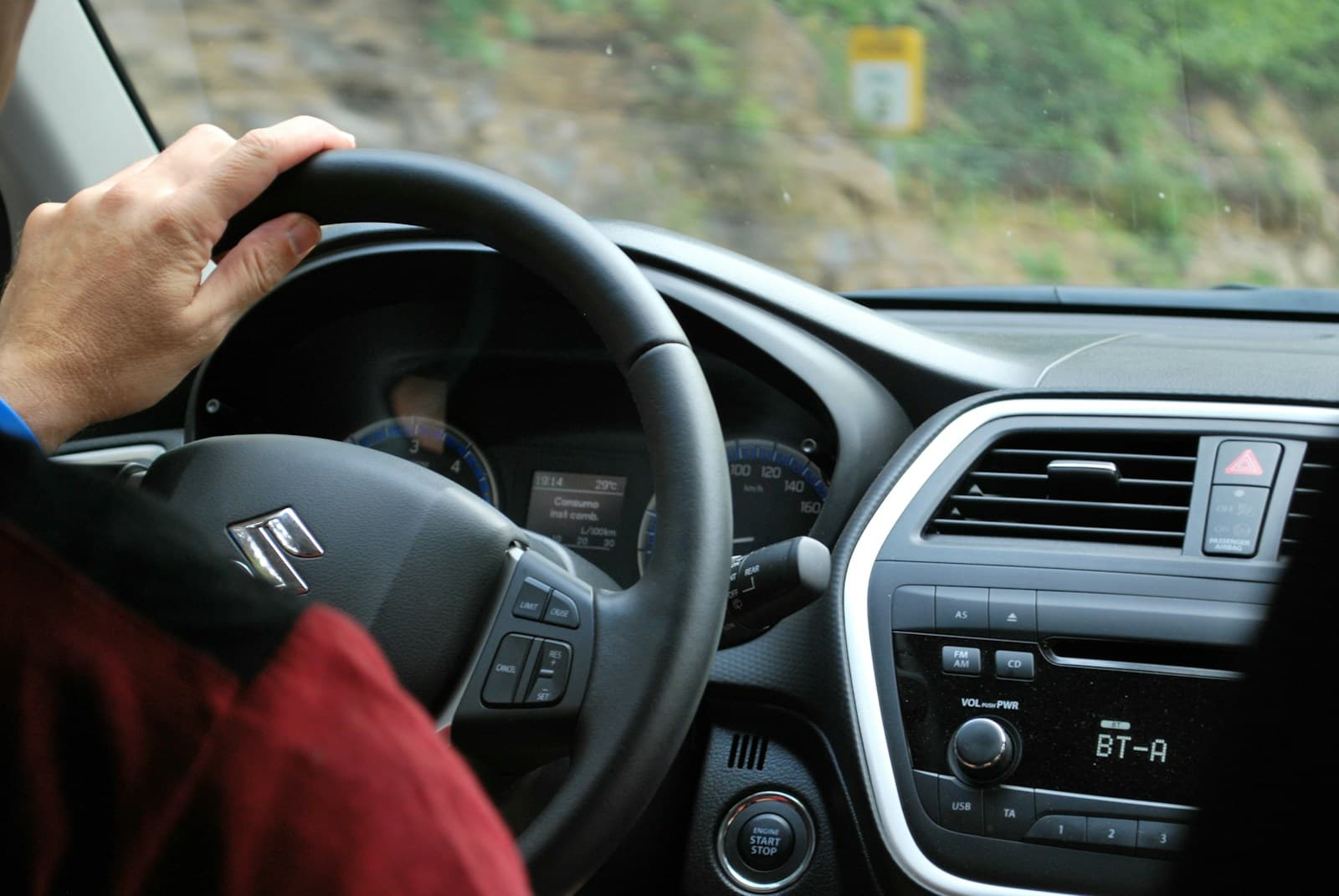
Ohio drivers 65 and older face a shifting insurance landscape: rates that climb after 70 despite clean records, mature driver discounts that aren't applied automatically, and coverage decisions that look different when you're no longer commuting 40 miles each day.
How Ohio's Mandated Mature Driver Discount Works (And Why Most Seniors Miss It)
Ohio law requires insurers to offer a discount to drivers who complete an approved mature driver improvement course, but here's what the statute doesn't require: automatic enrollment or proactive notification at renewal. You must request the discount, provide proof of completion, and renew it every three years. Most carriers offer 5–15% off liability and collision premiums once you qualify, which translates to $180–$350 annually for a driver paying $1,200–$2,400 per year.
Approved courses in Ohio include AARP Smart Driver (online and in-person), AAA Roadwise Driver, and National Safety Council Defensive Driving. The course costs $20–$35, takes 4–8 hours, and can be completed online in segments. You'll receive a certificate valid for three years — submit it to your insurer within 90 days of completion, and confirm the discount appears on your next declaration page. If you don't see the line item, call and ask specifically for "the Ohio mature driver course discount under ORC 3937.41."
The discount applies at age 55 in Ohio, earlier than the typical 65+ threshold in non-mandate states. If you've been driving in Ohio since before retirement and haven't taken a refresher course in decades, this is the single highest-value action you can take before your next renewal. The return on a $25 course fee and six hours of your time is roughly 700% in year one, and the certification renews every three years with a shorter online refresher.
How Rates Change for Ohio Drivers Between 65 and 75
Ohio drivers typically see stable or even declining premiums from age 65 through 69, especially if they maintain a clean record and reduce mileage after retirement. The inflection point comes around age 70–72, when actuarial age factors begin to outweigh experience and claims history. Between age 70 and 75, Ohio drivers can expect premium increases of 12–22% even with no accidents or violations, with the steepest jumps occurring after age 73 in most carrier models.
This isn't about your driving ability — it's about pooled risk calculations. Insurers price based on injury severity in accidents involving older drivers, not frequency. Ohio is a tort state, meaning you can sue for damages beyond policy limits, which makes injury liability a significant cost driver for carriers. That actuarial reality shows up in your premium starting around age 70, regardless of your personal record.
The good news: Ohio's competitive insurance market and mandated mature driver discount create multiple recovery strategies. A clean-record driver age 72 who completes the course, switches to a low-mileage program, and shops three carriers at renewal can often offset the age-related increase entirely. The key is timing these moves before the age 70–72 renewal cycle, when the first significant jump typically appears.
Compare rates from carriers that specialize in senior drivers
Mature driver discounts, low-mileage rates, and coverage reviews — see what you're actually eligible for.
Get Your Free Quote✓ Mature Driver Discounts✓ No Obligation✓ Licensed Carriers✓ All 50 States
Low-Mileage and Pay-Per-Mile Programs for Retired Ohio Drivers
If you're no longer commuting to work and driving under 7,000 miles per year, you're likely overpaying for coverage priced on outdated mileage assumptions. Most Ohio carriers now offer low-mileage discounts (typically 5–15% off for under 7,500 annual miles) or usage-based programs that price by actual miles driven. For a retired driver logging 5,000 miles annually, the difference between standard and mileage-adjusted pricing can reach $300–$500 per year.
Progressive Snapshot, State Farm Drive Safe & Save, Nationwide SmartMiles, and Allstate Milewise are all available in Ohio. The programs differ: some require a plug-in device or smartphone app that tracks mileage and driving behavior, while others rely on periodic odometer photos. If you're uncomfortable with telematics monitoring your braking or acceleration patterns, ask specifically for mileage-only programs — several carriers offer them without behavior tracking.
The eligibility window matters. Most carriers allow low-mileage enrollment at any policy term, but the deepest discounts require 6–12 months of data before full savings apply. If you retired in the past year and haven't updated your insurer on reduced mileage, call before your next renewal and ask for a mileage adjustment. Provide your current odometer reading and an estimate for annual miles — many carriers will adjust your rate mid-term if the difference is significant.
Does Full Coverage Still Make Sense on a Paid-Off Vehicle in Ohio?
This is the most common coverage question from Ohio drivers over 65, and the answer depends on three variables: your vehicle's actual cash value, your liquid savings, and your risk tolerance for a total loss. If your car is worth $4,000 and your comprehensive and collision premiums total $600 per year, you're paying 15% of the vehicle's value annually to insure against a loss you could potentially absorb from savings.
Run this calculation: add up your collision and comprehensive premiums for the next 12 months, subtract your deductible (typically $500–$1,000), and compare that net coverage amount to your vehicle's current value on Kelley Blue Book or NADA Guides. If you're paying $700/year with a $1,000 deductible on a vehicle worth $5,000, you're insuring $4,000 of value at an effective cost of 17.5% annually. For many fixed-income households, that's not cost-justified.
The alternative: drop collision and comprehensive, keep liability limits at 100/300/100 or higher, and set aside the premium savings in a vehicle replacement fund. Ohio requires only 25/50/25 minimum liability, but that's far too low if you own a home or have retirement assets to protect in a lawsuit. Liability is the coverage you keep — it protects your assets if you cause a serious accident. Collision and comprehensive protect the car itself, which becomes a discretionary expense as the vehicle ages and depreciates.
Medical Payments Coverage and Medicare Coordination in Ohio
Medical payments coverage (MedPay) pays for medical expenses after an accident regardless of fault, up to your policy limit — typically $1,000–$10,000. For Ohio drivers on Medicare, this creates a coordination question: does MedPay duplicate your existing health coverage, or does it fill gaps Medicare doesn't cover?
Medicare Part B covers accident-related injuries, but it doesn't pay immediately and it includes deductibles and copays. MedPay pays first, without waiting for fault determination, and covers expenses Medicare may not — ambulance rides, emergency room copays, and deductibles. For a driver age 68 with a $500 Medicare Part B deductible and $5,000 in MedPay, that coverage ensures immediate payment for accident-related medical bills without tapping retirement savings or waiting for Medicare processing.
The cost in Ohio is modest: $5,000 in MedPay typically adds $30–$60 annually to your premium. If you carry a Medicare Supplement (Medigap) plan that covers most out-of-pocket costs, MedPay may be redundant. If you have Original Medicare with high deductibles or a Medicare Advantage plan with significant copays, keeping $2,500–$5,000 in MedPay provides immediate liquidity after an accident. Review your Medicare coverage documents and compare deductibles — if your health plan leaves you exposed to $1,000+ in immediate out-of-pocket costs after an accident, MedPay is worth the premium.
Uninsured Motorist Coverage in Ohio: Why It Matters More After 65
Ohio does not require uninsured motorist (UM) or underinsured motorist (UIM) coverage, but insurers must offer it and you must reject it in writing if you decline. Approximately 13% of Ohio drivers are uninsured, according to the Insurance Research Council — higher than the national average of 12.6%. For a driver over 65 with retirement assets and potentially higher medical costs in an accident, UM/UIM coverage is one of the most cost-effective protections available.
UM coverage pays for your injuries if you're hit by a driver with no insurance. UIM pays if the at-fault driver's liability limits are too low to cover your damages. In Ohio, a serious injury accident can easily generate $100,000+ in medical costs and lost quality of life damages. If the at-fault driver carries only Ohio's 25/50/25 minimum and your injuries exceed $25,000, you're left covering the difference — unless you carry UIM coverage at higher limits.
The premium is surprisingly low: adding 100/300 UM/UIM coverage in Ohio typically costs $80–$150 annually, roughly 8–12% of your total premium. That's a small expense to protect against a high-severity, low-probability event — exactly the kind of risk insurance is designed to cover. If you declined UM/UIM when you first bought your policy decades ago, revisit that decision now. Your assets, medical costs, and risk profile have changed since age 45.
Shopping Ohio Carriers: What Changes After 65
Ohio is a competitive insurance market with 15+ carriers actively writing senior driver policies, but not all rate age the same way. Some carriers penalize age more aggressively starting at 70, while others weight claims history and credit more heavily. The variance means shopping rates at age 66, 70, and 75 often produces meaningfully different results than staying with the same carrier for decades.
Compare at least three carriers at each renewal after age 65, and focus on carriers known for competitive senior pricing: State Farm, Nationwide, Erie, Grange, and Auto-Owners all write significant senior driver business in Ohio. Don't limit your search to the largest national brands — regional carriers often offer better pricing for clean-record drivers over 65 because they underwrite local risk pools more precisely.
Request quotes with identical coverage limits and deductibles so you're comparing true rate differences, not coverage variations. Ask each carrier specifically about their mature driver discount, low-mileage programs, and multi-policy bundling with homeowners or umbrella coverage. The spread between the highest and lowest quote for a 68-year-old Ohio driver with a clean record and 6,000 annual miles often exceeds $600–$900 annually — enough to justify the 90 minutes it takes to compare three carriers carefully.