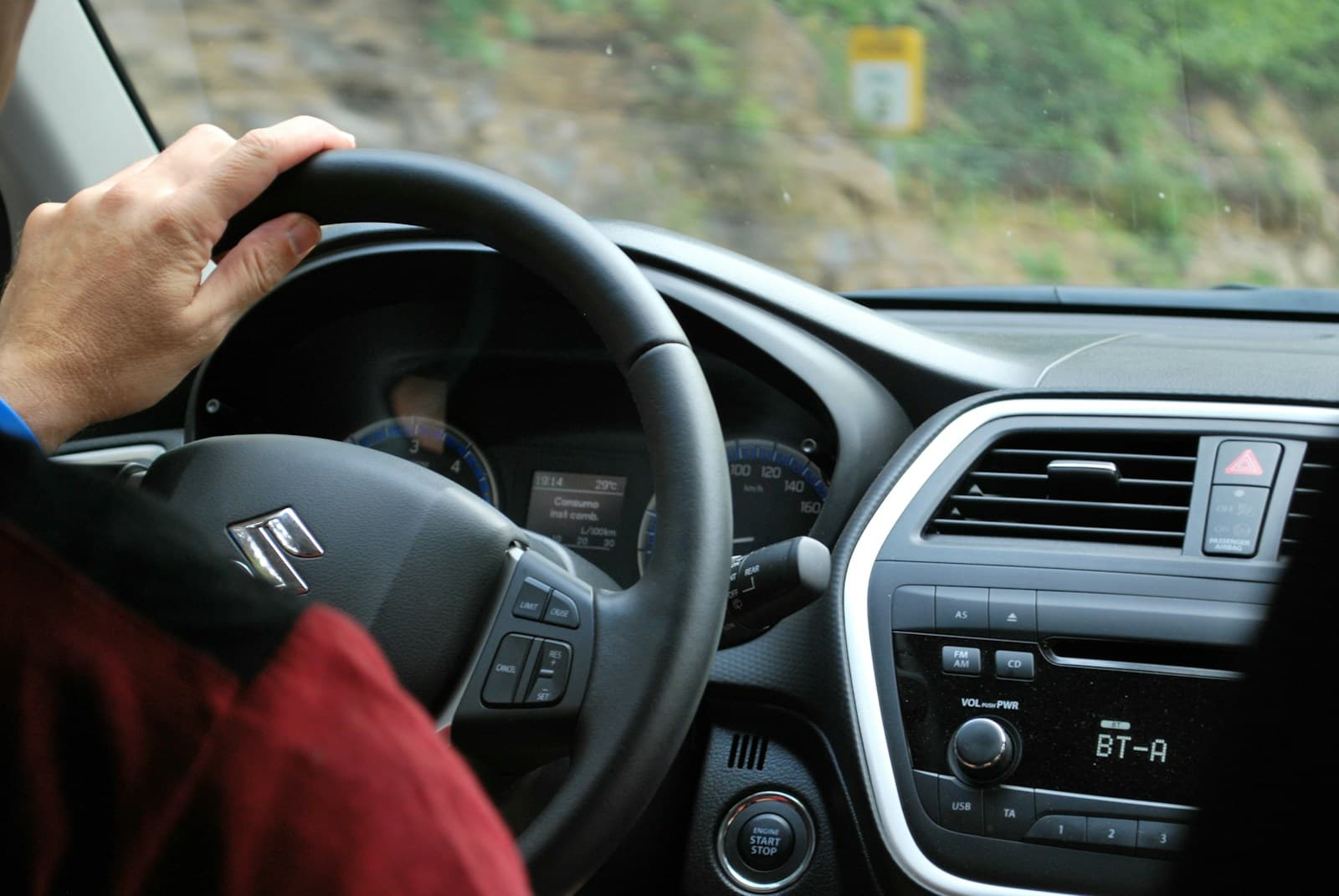
If you're driving a paid-off Outback and wondering whether you still need full coverage — or whether your premiums should be lower now that you're no longer commuting — the right coverage mix depends more on your vehicle's current value and your state's medical coverage rules than on the model itself.
Why the Outback Changes the Coverage Calculation for Retirees
The Subaru Outback sits in an unusual insurance position for senior drivers: it's neither a luxury vehicle that demands full coverage nor an older sedan you can afford to self-insure. Most 2015–2020 Outbacks currently trade between $12,000 and $22,000, depending on mileage and trim. That middle-market value means the standard "drop collision and comprehensive when your car is paid off" advice doesn't automatically apply — but neither does the assumption that you must carry full coverage indefinitely.
The Outback's all-wheel-drive system and reputation for longevity create a secondary consideration: repair costs run 15–25% higher than comparable two-wheel-drive sedans, even for minor damage. A front-end collision that might cost $3,200 to repair on a Honda Accord can run $4,000–$4,500 on an Outback due to symmetrical AWD components and Subaru's parts pricing. This matters when you're deciding whether a $500 deductible on a $180/year collision premium makes sense.
Most carriers price the Outback favorably for senior drivers compared to crossover SUVs, despite the AWD system, because its safety ratings and typical ownership profile skew toward experienced, lower-risk drivers. The vehicle itself isn't driving your rate increases after 65 — age-based actuarial adjustments are. But the coverage decisions you make should account for what an Outback actually costs to fix and what it's worth today, not what you paid for it in 2017.
The Full Coverage Math: When Collision and Comprehensive Stop Paying
The standard industry guideline suggests dropping collision and comprehensive coverage when your combined annual premium exceeds 10% of your vehicle's current value. For a 2017 Outback worth $15,000, that threshold sits around $1,500 per year, or roughly $125/month for both coverages combined. If your collision premium is $90/month and comprehensive is $45/month, you're at $1,620 annually — just over the threshold where self-insuring starts to make mathematical sense.
But that 10% rule assumes you could absorb a total loss without financial hardship. For many senior drivers on fixed incomes, replacing a $15,000 vehicle out of savings would create genuine strain, even if the math suggests dropping coverage. A more conservative threshold for retirees is 7–8% of vehicle value, which accounts for the reality that your emergency fund may need to cover medical expenses, home repairs, or other priorities before a replacement vehicle.
Here's the calculation most senior Outback owners should run annually: Check your vehicle's current private-party value on Kelley Blue Book or Edmunds. Multiply that number by 0.08. If your combined collision and comprehensive premium exceeds that figure, request quotes for liability-only coverage and compare the annual savings against your realistic ability to replace the vehicle. For a 2016 Outback worth $13,000, that threshold is $1,040 per year, or about $87/month for both coverages. If you're paying $110/month, you're likely over-insured relative to the asset value.
Compare rates from carriers that specialize in senior drivers
Mature driver discounts, low-mileage rates, and coverage reviews — see what you're actually eligible for.
Get Your Free Quote✓ Mature Driver Discounts✓ No Obligation✓ Licensed Carriers✓ All 50 States
Liability Limits That Actually Protect Retirement Assets
The collision coverage question gets most of the attention, but liability limits matter more for senior drivers with accumulated assets. If you own a home with $180,000 in equity, have $220,000 in retirement accounts, and carry the state-minimum liability coverage of 25/50/25, a single at-fault accident with serious injuries could expose everything you've built over decades. Minimum liability coverage is designed to satisfy state requirements, not to protect what you own.
Most insurance professionals recommend liability limits of at least 100/300/100 for drivers with significant assets — $100,000 per person for bodily injury, $300,000 per accident, and $100,000 for property damage. For senior drivers with home equity and retirement savings, 250/500/100 provides meaningfully better protection for an additional $15–$35 per month in most states. That's $180–$420 annually to guard against a scenario that could cost you $400,000 or more in a worst-case judgment.
Umbrella policies provide another layer: $1 million in additional liability coverage typically costs $150–$300 per year for senior drivers with clean records. The umbrella sits above your auto and homeowners liability limits and activates only after those underlying policies are exhausted. If you have a net worth above $500,000, the umbrella premium is almost always justified by the risk profile of modern injury litigation. The Outback's safety features reduce your likelihood of causing a serious accident, but they don't eliminate the exposure if one occurs.
Medical Payments Coverage and the Medicare Coordination Question
Medical payments coverage (MedPay) pays for accident-related medical expenses regardless of fault, typically in amounts ranging from $1,000 to $10,000. For senior drivers with Medicare, this creates a common question: is MedPay redundant, or does it fill gaps that Medicare leaves open? The answer depends on your state's requirements and your specific Medicare coverage.
Medicare Part B covers accident-related injuries, but it doesn't pay immediately — there's often a delay while the insurer determines fault and processes claims. MedPay pays within days of treatment, which means it can cover your Medicare Part B deductible ($240 in 2024), any coinsurance amounts, and expenses Medicare doesn't fully cover, like ambulance transport. In states that don't require personal injury protection (PIP), MedPay functions as a valuable gap-filler for senior drivers who want immediate accident medical coverage without waiting for liability determination.
In no-fault states that mandate PIP coverage, the calculation changes. PIP provides broader first-party medical coverage than MedPay and is required by law, which makes adding MedPay on top of it redundant in most cases. However, in tort states like California, Ohio, and Illinois, a $5,000 MedPay policy typically costs $35–$65 per year and coordinates with Medicare to eliminate out-of-pocket costs after most accidents. For senior drivers who want zero medical billing friction after an accident, that's often worthwhile even with comprehensive Medicare coverage.
Discounts Senior Outback Owners Are Likely Missing
Mature driver course discounts remain the single most underutilized rate reduction for senior drivers. Most states either require or strongly encourage insurers to offer discounts ranging from 5% to 15% for drivers who complete an approved defensive driving refresher course — typically an 8-hour classroom or online program offered by AARP, AAA, or state-approved providers. The discount applies for three years in most states, and the course costs $20–$35. For a senior driver paying $1,400 annually, a 10% discount saves $140 per year, recovering the course cost seven times over during the discount period.
Low-mileage discounts apply directly to many senior Outback owners who no longer commute. If you're driving fewer than 7,500 miles per year — common for retirees who use the vehicle for errands, medical appointments, and occasional trips — most carriers offer 10–20% discounts on collision and liability premiums. The key is proactively notifying your insurer of your reduced mileage and providing an odometer reading. Carriers don't automatically adjust your rate when you retire; you must request the mileage recalculation.
Pay-per-mile and telematics programs offer another path for lower-mileage senior drivers, though adoption remains low in this demographic. Programs like Nationwide SmartMiles or Metromile charge a low daily base rate plus a per-mile rate, typically 3–8 cents per mile. For a senior Outback owner driving 6,000 miles per year, this can reduce annual premiums by 30–40% compared to traditional policies. The trade-off is monthly variability — your premium fluctuates based on actual use — but for disciplined low-mileage drivers, the savings are substantial and verifiable.
State-Specific Rules That Change What You Should Carry
No-fault states like Michigan, Florida, and New York require personal injury protection that significantly affects what other medical coverage makes sense for senior drivers. Michigan's PIP requirements, even after recent reforms, provide extensive medical coverage that duplicates much of what Medicare offers, though PIP pays first. In these states, the decision to add MedPay is almost never cost-justified — you're already mandated to carry first-party medical coverage that exceeds what MedPay provides.
States with mandatory uninsured motorist coverage, like Illinois, Kansas, and several northeastern states, build baseline protection into every policy unless you explicitly reject it in writing. For senior drivers, maintaining or increasing uninsured motorist limits is often smarter than maximizing collision coverage on a depreciating Outback. Uninsured motorist coverage protects you when an at-fault driver has no insurance or insufficient limits to cover your injuries and vehicle damage — a scenario that's become more common as the percentage of uninsured drivers has risen in many states.
Some states offer mature driver course discounts by statute, while others leave it to carrier discretion. Florida, Illinois, and New York mandate that insurers provide discounts to senior drivers who complete approved courses, with specific minimum discount percentages spelled out in state law. In states without mandated discounts, like Alabama or Tennessee, some carriers offer them voluntarily while others don't. This creates a competitive opportunity: when comparing quotes, specifically ask each carrier whether they offer mature driver discounts and what documentation they require, because the same course completion may save you 12% with one carrier and nothing with another.