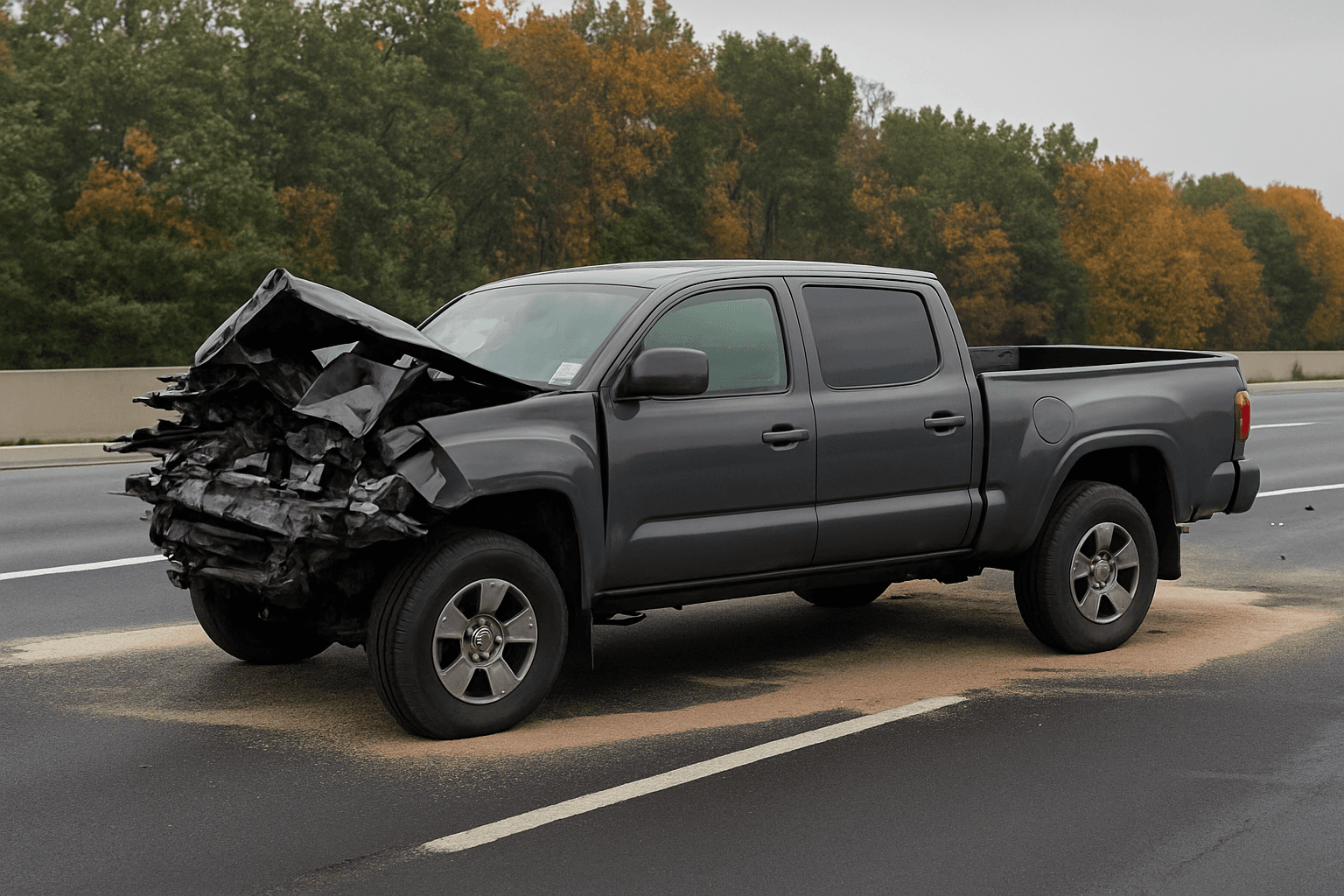
One at-fault accident after age 65 affects your Florida auto insurance rates differently than it would for younger drivers. Most carriers impose smaller surcharges on senior drivers with long clean records, but the discounts you qualified for before the accident may be suspended for three years.
How One At-Fault Accident Changes Your Premium After Age 65 in Florida
A single at-fault accident adds $380 to $740 annually to your Florida auto insurance premium if you're over 65, compared to $520 to $980 for a driver under 50 with identical coverage. Most carriers recognize that senior drivers with decades of clean records represent lower ongoing risk than younger drivers with similar recent violations. The surcharge typically remains on your policy for three years from the accident date, not the claim settlement date.
Florida uses a three-year lookback window for accidents and violations. On the day your accident reaches its three-year anniversary, you become eligible again for accident-free discounts and mature driver course reductions. Carriers do not automatically restore these discounts at renewal. You must request reinstatement, provide proof of mature driver course completion if required, and confirm the accident has aged off your motor vehicle report.
The larger financial impact for most senior drivers is the suspension of existing discounts during the three-year surcharge period. If you were receiving a 10% mature driver discount, a 5% low-mileage discount, and a 12% multi-policy discount before the accident, most carriers will suspend only the mature driver discount while maintaining the others. That suspended discount—worth $140 to $280 annually on typical senior coverage—adds to the direct surcharge, creating a combined rate increase larger than the accident penalty alone.
Which Florida Carriers Charge the Lowest Rates for Senior Drivers With One Accident
State Farm, Auto-Owners, and USAA consistently offer the lowest post-accident rates for Florida drivers over 65, with monthly premiums ranging from $95 to $165 for minimum liability coverage after a single at-fault claim. USAA restricts eligibility to military members, veterans, and their families. Auto-Owners operates through independent agents and is not available through online aggregators. State Farm maintains the largest agent network in Florida and offers accident forgiveness on some policies after three years of clean driving.
Progressive and GEICO occupy the mid-tier for senior drivers with accidents, with monthly rates between $125 and $190 for minimum coverage. Both offer online quoting and allow you to purchase directly without an agent. Progressive's Snapshot telematics program can reduce rates by 5-15% if you drive fewer than 7,000 miles annually, which applies during the accident surcharge period. GEICO does not suspend mature driver discounts for accident-free periods before the claim.
Liberty Mutual, Nationwide, and Farmers charge higher base rates for senior drivers with accidents but offer broader accident forgiveness programs. Liberty Mutual forgives your first accident after five years as a customer. Nationwide offers a Vanishing Deductible program that reduces your collision deductible by $100 annually for each year without a claim, which rebuilds value during your three-year surcharge window. These programs matter more for drivers planning to stay with the same carrier long-term than for those shopping immediately after an accident.
Compare rates from carriers that specialize in senior drivers
Mature driver discounts, low-mileage rates, and coverage reviews — see what you're actually eligible for.
Get Your Free Quote✓ Mature Driver Discounts✓ No Obligation✓ Licensed Carriers✓ All 50 States
How Florida's Mature Driver Course Discount Works After an Accident
Florida does not mandate that carriers offer mature driver course discounts, but most major carriers provide 5-10% premium reductions for drivers 55 and older who complete an approved defensive driving course. The Florida Department of Highway Safety maintains a list of approved courses, most of which are available online for $15 to $35 and take four to six hours to complete. You must complete the course every three years to maintain eligibility.
Most carriers suspend the mature driver discount for the full three-year accident lookback period, even if you complete a new course during that window. State Farm and Auto-Owners reinstate the discount immediately upon course completion if the accident occurred more than 12 months prior and you have had no additional violations. GEICO and Progressive maintain the discount if the course was completed before the accident date and remains valid, but do not allow new course completions to override the suspension.
The discount reinstates automatically on the renewal following your accident's three-year anniversary only if you have a valid course completion certificate on file with your carrier. If your original certificate expired during the surcharge period, you must complete a new course before the discount appears. Carriers do not notify you when the surcharge period ends or when you become eligible again for suspended discounts. Most senior drivers leave $180 to $320 per year unclaimed simply because they do not request reinstatement the month they become eligible.
Whether Full Coverage Still Makes Sense on a Paid-Off Vehicle After an Accident
Collision and comprehensive coverage cost $480 to $920 annually for a Florida driver over 65 with one at-fault accident, compared to $310 to $580 with a clean record. If your vehicle is worth less than $6,000, the coverage becomes cost-prohibitive after the accident surcharge is applied. Most financial advisors recommend dropping collision coverage when annual premiums exceed 10% of the vehicle's actual cash value.
Comprehensive coverage remains cost-justified longer than collision for senior drivers in Florida. Comprehensive pays for theft, vandalism, weather damage, and animal strikes, which are unrelated to driving behavior and do not increase in likelihood after an at-fault accident. Comprehensive premiums for drivers over 65 typically range from $90 to $180 annually even with an accident on record. If you park outside or live in a high-theft ZIP code, comprehensive coverage delivers measurable value regardless of vehicle age.
If you drop collision coverage, increase your liability limits to at least $100,000 per person and $300,000 per accident. Florida's minimum liability requirement is $10,000 per person and $20,000 per accident, which exposes retirement savings and home equity to lawsuit judgments in any serious collision. Liability coverage costs $40 to $80 more per year at higher limits but protects assets that collision coverage never addresses. One at-fault accident increases the probability of future claims by 30-40% in actuarial models, making higher liability limits more important after a claim than before.
Low-Mileage and Telematics Discounts Available During the Accident Surcharge Period
Most Florida carriers apply low-mileage discounts to drivers who report annual mileage under 7,500 miles, with savings ranging from 5% to 12%. The discount remains available during the three-year accident surcharge period because it reflects current driving exposure, not past claims history. If you no longer commute to work and drive primarily for errands and medical appointments, reporting accurate annual mileage can offset $120 to $260 of the accident surcharge.
Progressive's Snapshot, State Farm's Drive Safe & Save, and Nationwide's SmartRide telematics programs monitor braking, acceleration, time of day, and total miles driven. Senior drivers who avoid night driving and maintain smooth driving habits typically qualify for 8-15% discounts through these programs. The discount applies immediately and is not suspended during accident surcharge periods. Enrollment requires installing a plug-in device or using a smartphone app for 90 to 180 days, after which your discount is locked in for the policy term.
Geico does not offer telematics discounts in Florida but provides a multi-policy discount of 10-15% when you bundle auto and homeowners or renters insurance. Liberty Mutual offers a similar bundling discount and does not reduce it during accident surcharge periods. If you carry home insurance with a different carrier, moving both policies to the same company after an accident can recover more premium than any single discount program.
When to Shop for New Coverage After an Accident in Florida
Request quotes from at least three carriers the day your accident appears on your motor vehicle report, which typically occurs 15 to 45 days after the claim is filed. Waiting until your current carrier applies the surcharge at renewal wastes three to six months of potential savings. State Farm, Auto-Owners, and USAA apply smaller surcharges to senior drivers with long tenures, but only if you are already a customer when the accident occurs. Switching to these carriers after the accident often costs more than staying with a higher-surcharge carrier where you have policy tenure.
Re-shop your coverage again on the exact date your accident reaches its three-year anniversary. Most carriers reduce or eliminate the surcharge at the three-year mark, but the reduction is not automatic. You must request a re-quote, confirm the accident has aged off your record, and verify that all previously suspended discounts have been reinstated. Senior drivers who re-shop at the three-year mark save an average of $340 to $580 annually compared to drivers who remain with the same carrier without requesting a re-evaluation.
If you complete a mature driver course during the surcharge period, ask your current carrier whether they will reinstate the discount before the three-year window closes. State Farm and Auto-Owners reinstate the discount after 12 months if you complete a new course and have no additional violations. If your carrier refuses early reinstatement, request quotes from carriers that allow it. The mature driver discount is worth more over the remaining surcharge period than the loyalty tenure you lose by switching.