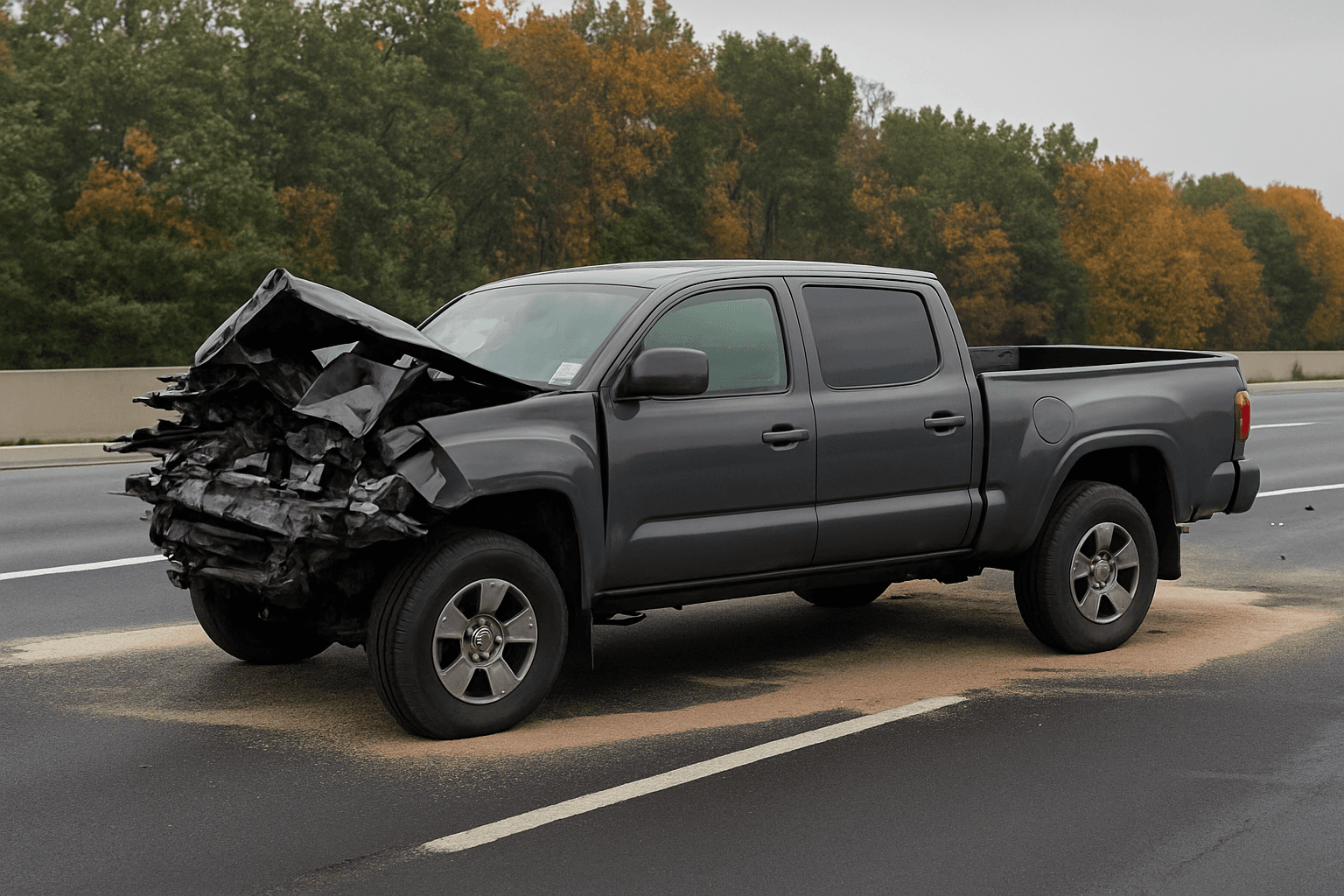
One at-fault accident on your record doesn't disqualify you from senior discounts in Georgia. Most carriers increase rates 20-40% after the first accident, but mature driver course savings and accident forgiveness programs can recover much of that premium within 12-18 months.
How Georgia Carriers Price One At-Fault Accident for Drivers Over 65
Georgia carriers typically increase premiums 20-40% after a first at-fault accident for drivers over 65, with the surcharge remaining on your policy for three years from the accident date. The percentage increase varies by carrier and your pre-accident rate tier, but the surcharge mechanism is consistent: your base rate increases, and any discounts you held before the accident remain unless the carrier re-underwrites your policy.
The asymmetry seniors face is that accident surcharges apply immediately at renewal following the claim, but mature driver course discounts require periodic re-verification. If you earned a 5-10% mature driver discount before the accident, most carriers will not automatically reapply it after the surcharge without updated course completion proof. You must request the discount again, submit current course documentation, and confirm the discount appears on your declaration page.
Carriers writing in Georgia with active senior discount programs include State Farm, GEICO, Progressive, Allstate, Nationwide, Travelers, and USAA. Discount availability after an accident depends on whether the carrier underwrites you as preferred or standard risk post-accident. Some carriers move you to a standard tier after the first accident, which may limit discount stacking even if you qualify individually for each program.
Which Carriers Offer Accident Forgiveness to Georgia Seniors
Accident forgiveness prevents the first at-fault accident from increasing your premium, but availability for drivers over 65 varies by carrier and requires meeting eligibility windows before the accident occurs. The program must be active on your policy at the time of the accident to apply.
State Farm offers accident forgiveness to Georgia policyholders after three years of claim-free driving, which includes drivers over 65. GEICO provides accident forgiveness as an optional add-on, available to drivers with five years accident-free history. Progressive includes accident forgiveness automatically after five years with the carrier and no at-fault accidents during that period. Allstate requires enrollment in their Milewise or Drivewise telematics program to access accident forgiveness for most senior drivers.
If the accident has already occurred and you did not have forgiveness active, your options narrow to managing the surcharge through discount stacking and shopping at the three-year mark when the accident ages off your record. Accident forgiveness is a prospective benefit, not a retroactive one.
Compare rates from carriers that specialize in senior drivers
Mature driver discounts, low-mileage rates, and coverage reviews — see what you're actually eligible for.
Get Your Free Quote✓ Mature Driver Discounts✓ No Obligation✓ Licensed Carriers✓ All 50 States
Georgia Mature Driver Course Requirements and Discount Timeline
Georgia law requires carriers to offer a premium reduction to drivers who complete a state-approved defensive driving course, but the statute does not mandate a specific discount percentage. Most carriers apply a 5-10% discount for seniors who complete an approved course, valid for three years from completion.
The Georgia Department of Driver Services approves courses offered by AAA, AARP, and the National Safety Council. Course length is typically 4-8 hours, available in classroom or online formats. Completion certificates must be submitted to your carrier within 30 days to qualify for the discount at your next renewal.
The critical timing issue for seniors with a recent accident: if your mature driver discount was earned more than three years ago, the discount has expired regardless of the accident. You must complete a new course and resubmit certification to reactivate the discount. Carriers will not notify you when the discount expires. If you complete the course after the accident but before your next renewal, the discount applies to your surcharged rate, reducing the net increase you pay.
Should You Keep Full Coverage on a Paid-Off Vehicle After an Accident
The decision hinges on your vehicle's actual cash value versus the annual cost of comprehensive and collision coverage post-accident. If your vehicle is worth less than ten times your annual comprehensive and collision premium, most financial planners recommend dropping to liability-only coverage.
After an at-fault accident, your collision premium specifically will increase because the carrier now prices you as higher risk for future collision claims. If you were paying $400 annually for collision before the accident, expect $500-$560 after the surcharge applies. Comprehensive coverage typically does not increase after an at-fault collision unless the carrier re-tiers your entire policy.
For a vehicle worth $6,000, paying $560 annually for collision coverage with a $500 or $1,000 deductible leaves minimal net benefit after two claims. Seniors on fixed income should calculate the three-year total cost of collision coverage post-accident versus the vehicle's current replacement value. If the math does not justify continued collision coverage, keep comprehensive to cover non-collision losses like theft, weather damage, and animal strikes, which remain actuarially independent of your at-fault accident.
Low-Mileage and Telematics Programs for Retired Georgia Drivers
If you drive fewer than 7,500 miles annually, low-mileage programs can offset 10-20% of your premium even with an at-fault accident on record. The accident surcharge applies to your base rate, but mileage-based discounts apply after that calculation, creating a stacking effect that reduces your net cost.
Progressive Snapshot, Allstate Milewise, Nationwide SmartMiles, and State Farm Drive Safe & Save all operate in Georgia and accept drivers with one at-fault accident. These programs measure either total mileage or driving behavior patterns like hard braking, speed, and time of day. Mileage-only programs are preferable for seniors concerned about behavior scoring, as they reward reduced driving without penalizing cautious driving habits that may include slower speeds or frequent stops.
Enrollment requires a telematics device or mobile app that reports mileage to the carrier. Discount calculations occur at each renewal based on the prior term's data. If you averaged 5,000 miles over six months, your discount reflects that reduced exposure regardless of the accident surcharge applied to your base rate.
When to Shop Georgia Carriers After an Accident
Most carriers re-evaluate pricing annually, but your largest rate reduction opportunity occurs 36 months after the accident date when the surcharge ages off your record entirely. Shopping before that window can still yield savings if your current carrier applied a higher-than-average accident penalty.
Request quotes from at least three carriers at your next renewal following the accident, and again at the 36-month mark. Carrier appetite for drivers with one accident varies significantly. GEICO and Progressive typically offer more competitive rates for seniors with a single at-fault accident compared to Allstate or Nationwide, but this varies by your specific ZIP code and coverage selections.
When shopping, confirm that any mature driver discount you qualified for appears on the new quote. Carriers will not automatically apply the discount without proof of course completion, and some agents skip the question during quoting. Bring your course completion certificate to every quote conversation and confirm the discount line item appears on your declaration page before binding coverage.
How Medical Payments Coverage Interacts With Medicare After an Accident
Medical payments coverage on your auto policy pays regardless of fault and covers expenses Medicare does not, including deductibles, co-pays, and services Medicare excludes. For Georgia seniors, this coverage becomes more relevant after an at-fault accident because you are liable for injuries to others, and your own injury costs can exceed Medicare's immediate coverage.
Medicare is always secondary to auto insurance medical payments coverage. If you carry $5,000 in medical payments coverage and incur $8,000 in accident-related medical bills, your auto policy pays the first $5,000, and Medicare processes the remaining $3,000 under its standard reimbursement rules. This coordination prevents you from paying out-of-pocket for costs Medicare would otherwise delay or deny.
After an at-fault accident, some seniors drop medical payments coverage to reduce premium costs. This is a mistake if you are on Medicare. The coverage is inexpensive relative to collision, typically $30-$60 annually for $5,000 in coverage, and eliminates the gap between accident date and Medicare claims processing. If you reduce coverage anywhere post-accident, reduce collision or comprehensive first.