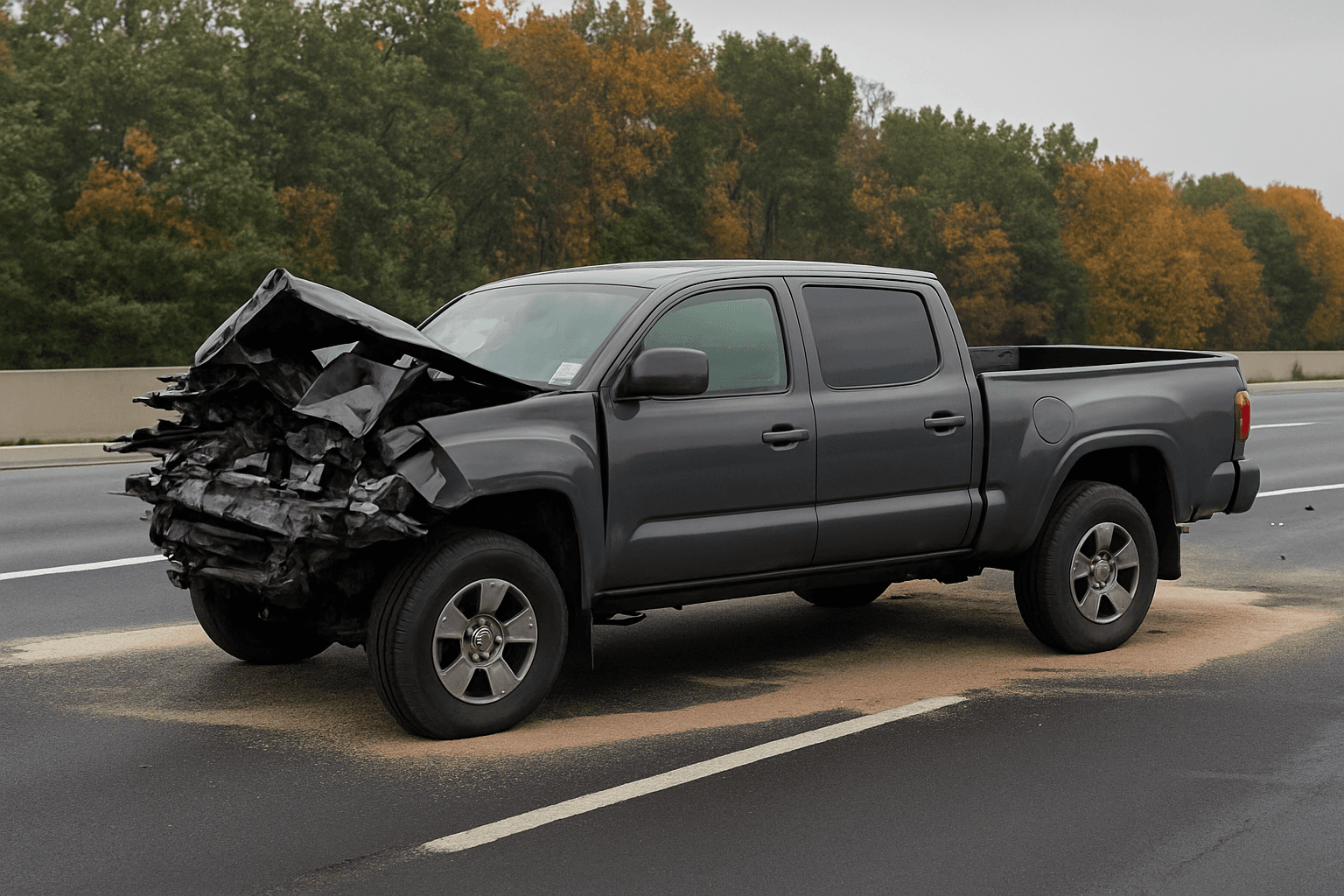
Your first at-fault accident after decades of clean driving doesn't affect your premium the same way it would at 35. Ohio carriers apply accident surcharges differently to senior drivers, and most discount programs remain available if you know how to preserve them.
How Ohio Carriers Calculate Accident Surcharges for Drivers Over 65
Your first at-fault accident typically raises your premium 20-40% in Ohio, but the surcharge ceiling for drivers 65 and older is often lower than the standard rate increase applied to younger drivers. State Farm and Nationwide cap first-accident surcharges at roughly 25% for senior drivers with 10+ years of prior clean driving, compared to 35-45% for drivers under 50 with similar records. The surcharge applies for three to five years depending on carrier.
Ohio does not mandate accident forgiveness, but most major carriers writing in the state offer it as an optional or tenure-based benefit. If you purchased accident forgiveness before the collision, your rate won't increase from the accident itself, though you'll lose the forgiveness benefit going forward. If you didn't have it, the surcharge begins at your next renewal and decreases incrementally each year the accident ages off your record.
The accident appears on your motor vehicle record for three years from the date of the incident. Carriers pull your MVR at renewal, so even if you switch insurers during the surcharge period, the new carrier will see the at-fault accident and apply their own pricing adjustment. Shopping immediately after an accident rarely saves money because all carriers price the same risk factor, but comparing rates 12-18 months later often reveals meaningful differences as carriers weight aging accidents differently.
Which Senior Discounts Survive an At-Fault Accident in Ohio
Your mature driver course discount remains valid after an at-fault accident. Ohio-approved defensive driving courses through AARP, AAA, and NSC earn you a discount typically ranging from 5-15% depending on carrier, and that discount is tied to course completion, not your driving record. The discount renews every three years when you retake the course.
Low-mileage and pay-per-mile programs like Nationwide SmartMiles or Metromile continue after an accident as long as your annual mileage stays within the program threshold. These programs save senior drivers who no longer commute an average of $300-$600 annually in Ohio, and the savings stack on top of age-based discounts even with an accident surcharge applied to the base rate.
Carrier-specific tenure discounts and loyalty credits usually remain intact. If you've been with the same insurer for 5, 10, or 15+ years, that longevity discount doesn't disappear after a single accident. However, some carriers reset or pause new-customer promotional rates if you switch after an accident, so staying with your current insurer through the surcharge period often costs less than moving to a competitor offering a teaser rate that vanishes at the first renewal.
Compare rates from carriers that specialize in senior drivers
Mature driver discounts, low-mileage rates, and coverage reviews — see what you're actually eligible for.
Get Your Free Quote✓ Mature Driver Discounts✓ No Obligation✓ Licensed Carriers✓ All 50 States
When Accident Forgiveness Makes Sense for Senior Drivers in Ohio
Accident forgiveness costs $40-$80 annually as an add-on in Ohio, or it's granted automatically after five years claim-free with carriers like Allstate, Progressive, and Nationwide. If you're 65-70 with a clean record and plan to keep your current vehicle another 5+ years, buying forgiveness now protects against the 20-40% surcharge that would otherwise apply to your next at-fault incident.
The break-even calculation is straightforward. If your current premium is $1,200 annually and an at-fault accident would raise it by 25% ($300/year for three years), you'd pay $900 in surcharges. Accident forgiveness costing $60/year over five years totals $300, meaning you break even if you have one at-fault accident during that window. For senior drivers statistically more likely to experience an accident after age 70 due to reaction time or visibility factors, the coverage often pays for itself.
Some Ohio carriers bundle accident forgiveness with vanishing deductible programs that reduce your collision or comprehensive deductible by $100 annually for each year you remain claim-free, up to your full deductible amount. If you've already used your one-time forgiveness after this accident, rebuilding to qualify again typically requires three to five claim-free years depending on carrier underwriting rules.
Coverage Adjustments That Lower Premiums Without Increasing Risk
Raising your collision and comprehensive deductibles from $500 to $1,000 immediately reduces your premium 15-25% in Ohio. If your vehicle is paid off and worth less than $8,000, a higher deductible makes sense because you're self-insuring a smaller potential loss. A 2015 Honda Accord worth $6,500 with a $1,000 deductible means your maximum insured loss is $5,500, and the carrier's reduced risk translates directly to lower premiums.
Dropping collision coverage entirely makes financial sense when your vehicle's actual cash value falls below $3,000-$4,000. The annual cost of collision coverage on an older vehicle often exceeds 10% of the car's value, meaning you'd pay more in premiums over three years than you'd recover in a total-loss claim after the deductible. Comprehensive coverage for theft, vandalism, and weather damage typically costs $150-$300 annually in Ohio and remains worth carrying even on older vehicles given the state's hail and deer-strike exposure.
Medical payments coverage overlaps with Medicare Part B, which covers accident-related injuries regardless of fault. If you're 65+ and enrolled in Medicare, reducing medical payments from $5,000 to $1,000 or eliminating it entirely avoids paying twice for the same protection. PIP coverage is not required in Ohio, and most senior drivers already have health insurance that provides better injury coverage than a $5,000 MedPay policy.
How to Compare Rates After an At-Fault Accident
Request quotes from at least three carriers 30-45 days before your current policy renews. Your renewal notice will show the post-accident rate, and competing quotes let you confirm whether your current carrier is pricing the accident competitively or applying a steeper surcharge than market. State Farm, Nationwide, and Erie typically offer the most competitive post-accident rates for senior drivers in Ohio with otherwise clean records.
Provide identical coverage limits and deductibles to each carrier when requesting quotes. A lower quote with a $2,500 deductible isn't comparable to your current $500 deductible policy. Ask each agent whether they apply a mature driver discount, what defensive driving courses qualify, and whether the quote includes all available senior-specific discounts. Carriers won't always apply discounts automatically, and the difference between a quoted rate and a properly discounted rate averages $200-$400 annually for drivers over 65.
Re-shop your rate annually for the first three years after the accident. Surcharges decrease as the accident ages, and carriers weight 12-month-old accidents differently than 36-month-old accidents. The carrier offering the best rate immediately after your accident may not be the most competitive two years later, and senior drivers who re-shop annually after an at-fault incident save an average of $300-$500 compared to those who stay with the same carrier through the full surcharge period.
Ohio Liability Requirements and Why Minimums Don't Protect Retirement Assets
Ohio requires 25/50/25 liability coverage: $25,000 per person for bodily injury, $50,000 per accident, and $25,000 for property damage. These minimums haven't changed since 1953 and don't reflect current medical costs or vehicle values. A single emergency room visit after a moderate-injury accident easily exceeds $25,000, and repairing or replacing a newer vehicle totaled in a crash often runs $30,000-$50,000.
Senior drivers with retirement savings, home equity, or investment accounts face personal liability exposure when minimum coverage limits are exceeded. If you cause an accident resulting in $75,000 in medical bills and you carry only $50,000 in bodily injury coverage, the injured party can pursue a judgment against your personal assets for the remaining $25,000. Umbrella policies costing $200-$400 annually provide an additional $1 million in liability protection and cover the gap between your auto policy limits and your actual exposure.
Increasing liability limits from 25/50/25 to 100/300/100 typically costs $150-$250 more annually in Ohio, or roughly $12-$20 per month. That increase is smaller than most senior drivers expect because liability pricing is based primarily on your driving record and claims history, not your age. Carrying higher limits after an at-fault accident also signals financial responsibility to carriers, which can partially offset accident surcharges when underwriters review your overall risk profile at renewal.