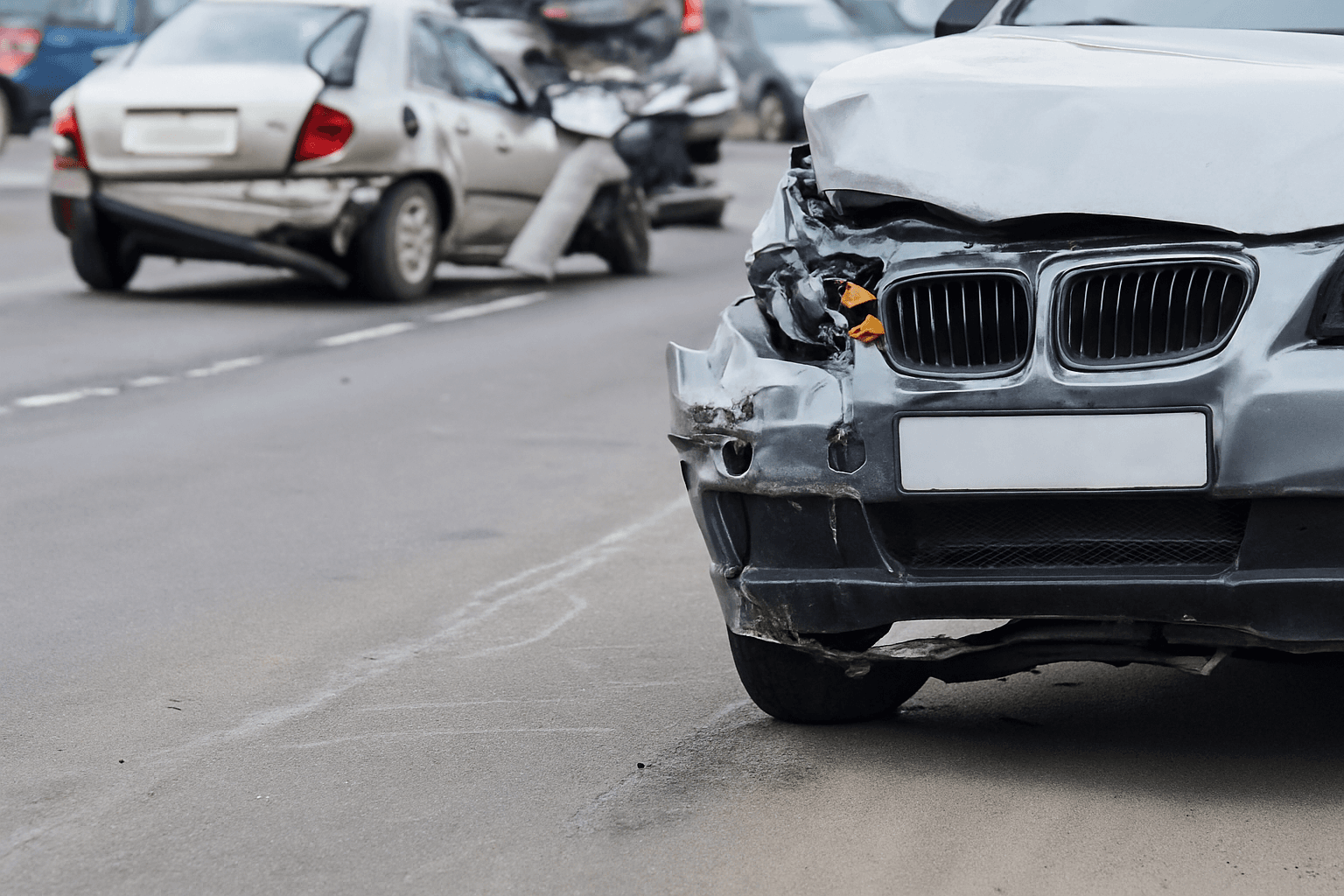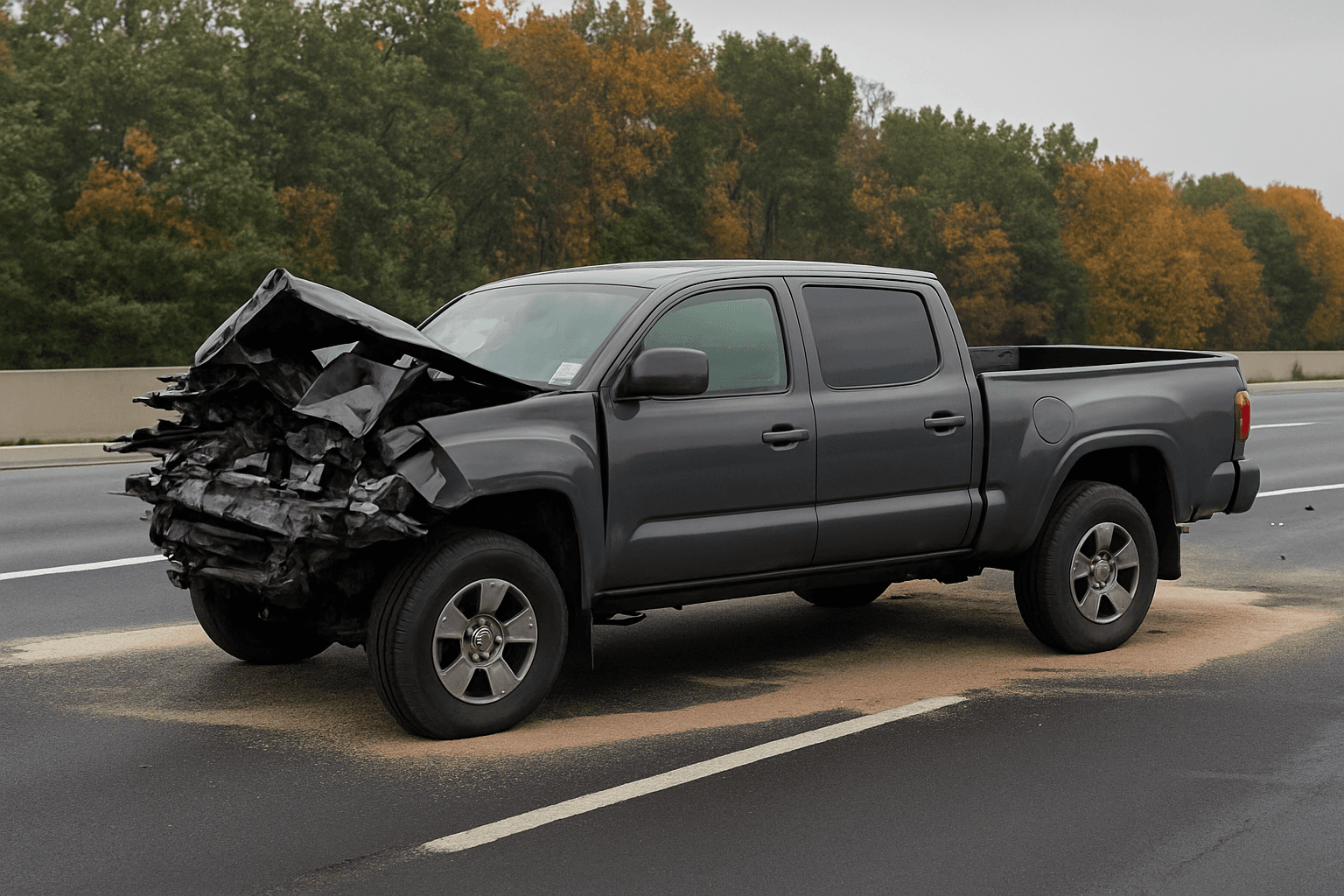
One at-fault accident doesn't erase decades of clean driving — but carriers price it heavily for senior drivers. Pennsylvania offers mandated mature driver discounts that stack with accident forgiveness, yet most seniors never request them.
Why Your Premium Spiked More Than Expected After One Accident
Pennsylvania carriers apply two separate surcharges to senior drivers after an at-fault accident: the accident surcharge itself (typically 20-40% for a first at-fault claim) and an age-based recalculation that assumes reduced reaction time compounds future risk. The combined impact pushes premiums 35-55% higher than the same accident would cost a 45-year-old driver with an identical record.
This dual-pricing structure isn't disclosed on renewal notices. You see one new premium, but two distinct pricing changes created it. The accident surcharge phases out over three to five years depending on your carrier. The age recalculation is permanent unless you actively trigger a discount review.
Pennsylvania law requires carriers to offer a 5% discount to drivers 55 and older who complete an approved mature driver course — and crucially, the statute does not allow carriers to remove this discount after an at-fault accident. Most senior drivers qualified for this discount before their accident but never knew to request re-verification after the claim closed. That's $60-$140 per year left on the table for a four-hour course.
Which Pennsylvania Carriers Offer Accident Forgiveness for Drivers Over 65
Accident forgiveness prevents the first at-fault accident from triggering a surcharge, but most carriers restrict eligibility by age or require you to purchase it before the accident occurs. In Pennsylvania, State Farm, Allstate, and Nationwide offer accident forgiveness programs that remain available to drivers over 65, but qualification rules differ significantly.
State Farm's accident forgiveness becomes automatic after nine years of claims-free driving — no purchase required. If you're 65+ with one recent at-fault accident, you won't qualify until you rebuild nine consecutive clean years, but it's worth noting for long-term planning. Allstate sells accident forgiveness as an add-on (typically $40-$80 annually) and allows drivers up to age 75 to purchase it if they've been claims-free for the prior five years. Nationwide includes one accident forgiveness event for drivers who maintain their Gold or Platinum tier membership, which requires bundling home and auto.
Progressive and GEICO both offer accident forgiveness in Pennsylvania, but Progressive's program (Loyalty Rewards) requires five years of continuous coverage with them before activation, and GEICO restricts new purchases to drivers under 70. If you're 65-69 and considering a switch, GEICO may still allow you to add it during your first policy term. Erie Insurance, which writes heavily in Pennsylvania, does not offer accident forgiveness but applies smaller accident surcharges to drivers 65+ who've completed an approved defensive driving course within the past three years.
Compare rates from carriers that specialize in senior drivers
Mature driver discounts, low-mileage rates, and coverage reviews — see what you're actually eligible for.
Get Your Free Quote✓ Mature Driver Discounts✓ No Obligation✓ Licensed Carriers✓ All 50 States
The Mandated Mature Driver Discount Most Seniors Miss After a Claim
Pennsylvania statute 40 P.S. § 1171.5 requires all carriers writing personal auto in the state to offer a minimum 5% discount to drivers 55 and older who complete a PennDOT-approved mature driver improvement course. The discount applies for three years from course completion, but here's what carriers don't advertise: the law does not allow them to void the discount after an at-fault accident.
Most senior drivers qualified for this discount years ago but never requested re-verification after their claim. Carriers do not automatically reapply discounts after a policy disruption like an accident surcharge. You must submit proof of course completion again, even if you completed the course within the past three years. If your original course certificate is still valid (dated within 36 months), submit it now. If it expired, retake the course — it's four to six hours online or in-person, costs $20-$35, and delivers $60-$140 in annual savings.
AAA, AARP, and the National Safety Council all offer PennDOT-approved courses. AARP's online version is the most common ($20 for AARP members, $25 for non-members) and can be completed in one sitting or across multiple sessions. AAA offers in-person courses through local chapters; check availability at your nearest AAA office. Completion certificates are issued immediately for online courses and within one week for in-person sessions. Submit the certificate to your carrier within 30 days to trigger the discount at your next renewal.
Should You Keep Full Coverage on a Paid-Off Vehicle After an At-Fault Accident
Collision and comprehensive coverage become harder to justify financially after an at-fault accident if your vehicle is paid off and worth less than $8,000. Pennsylvania does not require physical damage coverage — only liability, and dropping collision alone can reduce your premium by 25-35%.
Run this calculation: take your vehicle's current market value (use Kelvin Blue Book private party value, not trade-in), subtract your collision deductible (typically $500-$1,000), and divide by your annual collision premium. If the result is less than three years, you're paying too much for coverage that's capped at a depreciating asset value. A 2015 sedan worth $6,000 with a $500 deductible and $400 annual collision premium delivers a maximum net payout of $5,500 — you'll recover your premium cost in 14 months only if you total the vehicle in that window.
Comprehensive coverage (for theft, vandalism, weather damage, and animal strikes) costs significantly less than collision and covers risks unrelated to your driving. If you drop collision, keep comprehensive unless your vehicle is worth under $3,000. Glass damage alone — common in Pennsylvania winters — can justify the $120-$180 annual cost. If you're unsure, request a requote with collision removed but comprehensive retained. Most carriers will run the scenario without changing your active policy.
How Medical Payments Coverage Interacts With Medicare After an Accident
Medical payments coverage (MedPay) pays your medical bills after an accident regardless of fault, and it coordinates with Medicare without triggering subrogation in most cases. Pennsylvania is not a no-fault state, so you don't have personal injury protection (PIP) as a mandatory coverage — MedPay is the optional equivalent.
If you're 65+ and enrolled in Medicare, MedPay acts as secondary coverage and pays costs Medicare doesn't cover: deductibles, copays, and transportation to medical appointments related to the accident. Medicare becomes the primary payer for accident-related treatment, but it doesn't cover everything immediately. MedPay fills the gap without requiring you to wait for a liability settlement from the at-fault driver's carrier.
MedPay limits in Pennsylvania typically range from $1,000 to $10,000. A $5,000 limit costs $40-$70 annually and covers two to three ER visits, follow-up appointments, and prescription costs before Medicare kicks in fully. If you were at fault in your recent accident and injured, MedPay would have covered your costs even though liability wouldn't apply. For senior drivers on fixed income, $5,000 in MedPay is more financially defensible than keeping collision coverage on a vehicle worth $7,000.
Low-Mileage and Telematics Programs That Accept Drivers With Recent Accidents
If you drive fewer than 7,500 miles annually — common for retired drivers who no longer commute — low-mileage programs can reduce your premium by 5-15% even with a recent at-fault accident on record. Most carriers in Pennsylvania offer either odometer-verified low-mileage discounts or telematics programs that track mileage via a plug-in device or smartphone app.
State Farm's Drive Safe & Save, Nationwide's SmartMiles, and Allstate's Milewise all accept Pennsylvania drivers with one at-fault accident in the past three years. Nationwide's SmartMiles is the most transparent: you pay a low daily base rate ($3-$6 per day depending on your base risk profile) plus a per-mile rate (typically $0.03-$0.07). If you drive 4,000 miles per year, SmartMiles typically saves $300-$600 annually compared to a standard policy.
Progressive's Snapshot program monitors mileage, hard braking, and time-of-day driving. It can deliver discounts up to 30%, but it penalizes hard braking events, which older drivers sometimes trigger during cautious defensive stops. If you're uncomfortable with behavior-based tracking, stick with odometer-verified programs like Metromile (available through Pennsylvania independent agents) or request State Farm's mileage-only tier, which doesn't score braking or acceleration.
What to Do Before Your Next Renewal
Request a full discount audit from your current carrier 60 days before renewal. Specifically ask whether your mature driver discount is active, when your last verification was submitted, and whether you qualify for low-mileage, bundling, or paid-in-full discounts. Carriers will not volunteer this information — you must request it explicitly.
If you haven't taken a PennDOT-approved mature driver course in the past three years, complete one before your renewal date. The discount activates at renewal only if the certificate is submitted at least 30 days in advance. If your carrier applies the 5% mature driver discount and you also qualify for a 10% low-mileage discount, the savings stack — you're looking at $180-$280 annually on a $1,200 policy.
Run comparison quotes from at least three carriers that actively write senior drivers in Pennsylvania with accident history: Erie, State Farm, Nationwide, and Penn National. Erie often quotes 15-25% lower than Progressive or GEICO for drivers 65+ with one accident, particularly if you've completed the mature driver course. Penn National applies smaller accident surcharges to senior drivers with otherwise clean records. Request quotes with your current coverage limits and again with collision removed if your vehicle is worth under $8,000 — the difference will clarify whether physical damage coverage still makes financial sense.