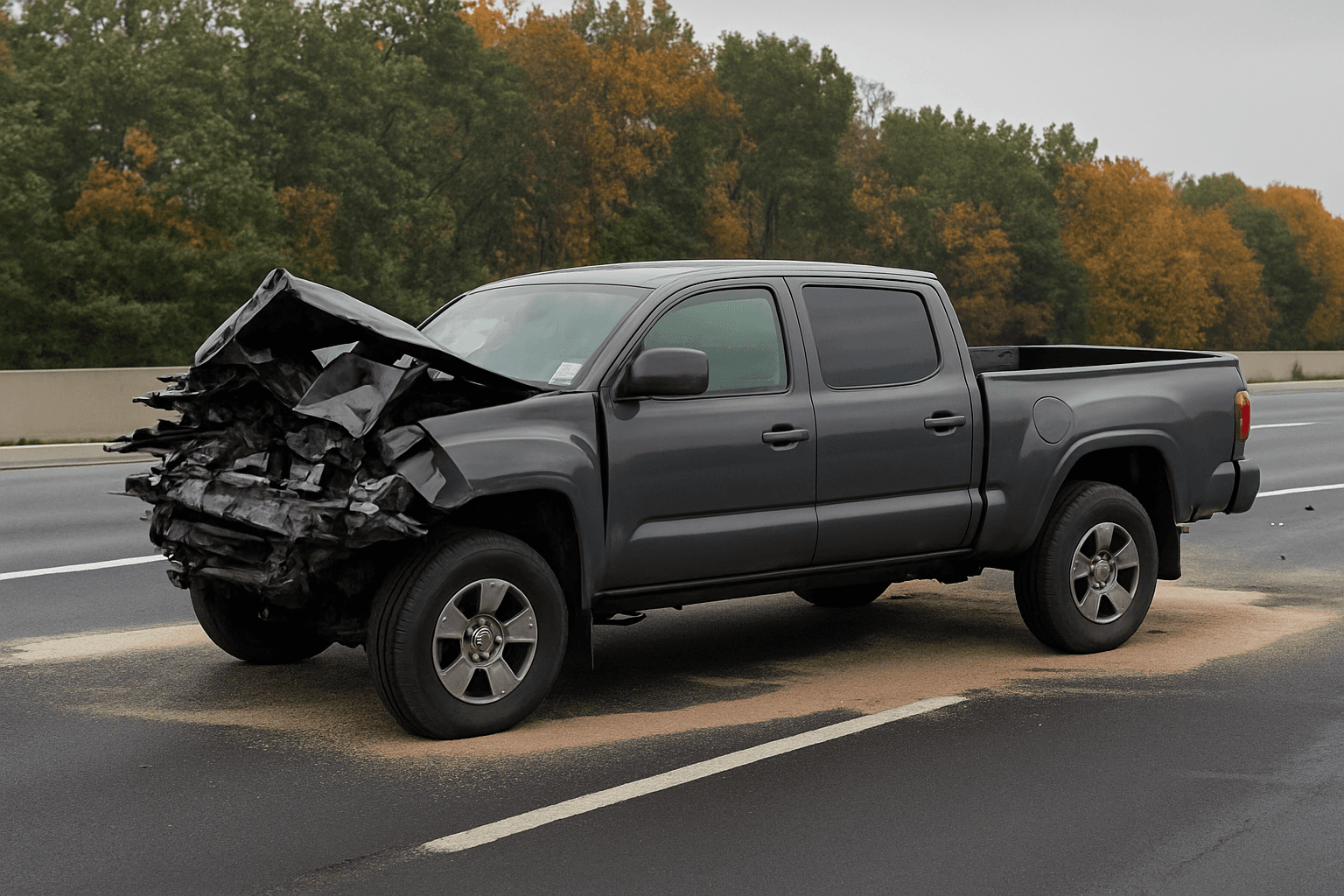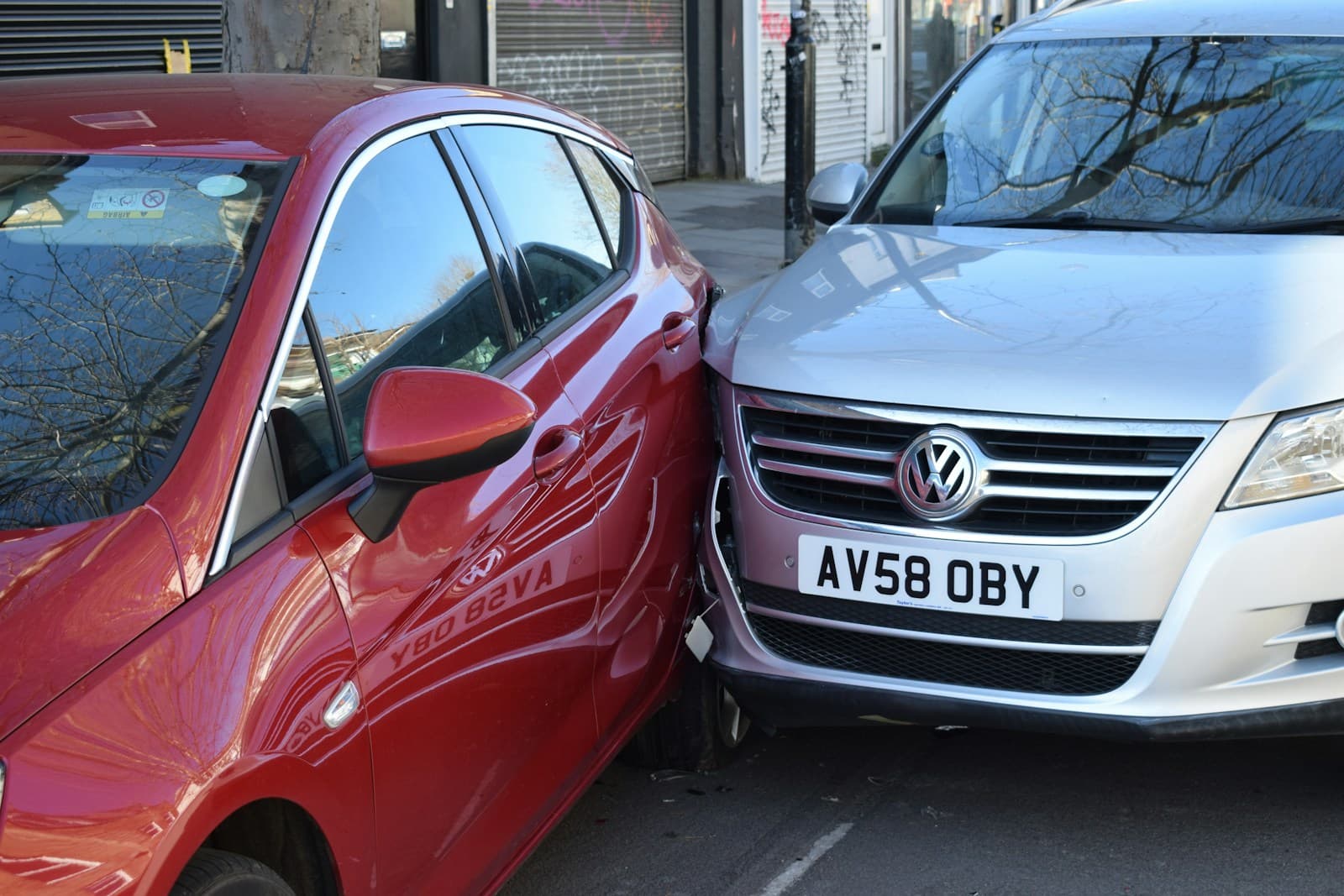
Your rates increased after one accident, but Virginia requires mature driver discounts and several carriers writing in the state offer accident forgiveness programs specifically structured for experienced drivers with otherwise clean records.
How One At-Fault Accident Changes Your Premium After Age 65 in Virginia
A single at-fault accident typically increases your premium by 20–40% in Virginia, with the surcharge lasting three years from the accident date. For a driver over 65 paying $950 annually before the accident, that translates to an additional $190–$380 per year, or $570–$1,140 over the full surcharge period.
Virginia uses a fault-based system, meaning the at-fault driver's insurance pays for the other party's damages. Your carrier assigns the surcharge based on claim severity — a $2,000 fender-bender produces a smaller increase than a $15,000 multi-vehicle collision. The surcharge applies at your next renewal after the claim closes, not immediately after the accident date.
Senior drivers face a compounding effect: age-related rate increases that begin around age 70 stack on top of accident surcharges. If you're 68 and just had your first accident in 40 years, you're looking at both the accident penalty and the actuarial age adjustment hitting simultaneously over the next few renewals. This is exactly when carrier choice and discount optimization matter most.
Virginia's Mandatory Mature Driver Discount and How It Offsets Accident Surcharges
Virginia law requires all carriers writing auto insurance in the state to offer a mature driver course discount to drivers who complete an approved defensive driving program. The discount typically ranges from 5–15% depending on the carrier, and it applies for three years after course completion.
The state-approved course is an 8-hour classroom or online program covering age-related changes in vision, reaction time, and defensive driving techniques. You can take the course through AARP, AAA, or other approved providers. Once you submit your completion certificate to your carrier, the discount applies to your next renewal and continues for three policy terms.
Here's why this matters after an accident: the mature driver discount applies to your base premium before the accident surcharge calculation in most carrier rating systems. If your base premium is $950 and you earn a 10% mature driver discount, your new base is $855. The accident surcharge then applies to that lower base, reducing the total dollar impact of the surcharge by roughly the same percentage as your discount. Over three years, a 10% discount on a surcharged policy can recover $150–$250 of the accident penalty.
Compare rates from carriers that specialize in senior drivers
Mature driver discounts, low-mileage rates, and coverage reviews — see what you're actually eligible for.
Get Your Free Quote✓ Mature Driver Discounts✓ No Obligation✓ Licensed Carriers✓ All 50 States
Which Virginia Carriers Offer Accident Forgiveness for Senior Drivers
Accident forgiveness prevents your first at-fault accident from triggering a surcharge. Several major carriers writing in Virginia offer this feature, but the qualification rules vary significantly for drivers over 65.
State Farm and Allstate offer accident forgiveness as a policy add-on in Virginia, typically requiring three to five years of accident-free history before the coverage activates. Liberty Mutual includes one-accident forgiveness in its standard policies for drivers who maintain a clean record for five consecutive years. GEICO offers forgiveness as part of its premier policy tier but restricts eligibility to drivers under age 70 in some states, though Virginia does not impose that restriction under current underwriting guidelines.
The key distinction for senior drivers: if you already had accident forgiveness in place when the accident occurred, your rate does not increase. If you're shopping after the accident, you cannot buy forgiveness retroactively, but you can earn it on your next policy if you stay claim-free for the required period. For a 67-year-old driver who just had their first accident, switching to a carrier that offers faster forgiveness qualification means your second policy term could already include protection against a future incident.
Should You Drop Comprehensive and Collision Coverage on an Older Vehicle After an Accident
If your vehicle is worth less than $4,000 and you're facing a 30% post-accident rate increase, the annual cost of comprehensive and collision coverage often exceeds the maximum claim payout you could receive. This is a common decision point for senior drivers on fixed income.
Virginia requires liability coverage but does not mandate comprehensive or collision. If you own your vehicle outright and it's more than 10 years old, calculate the actual cash value using Kelley Blue Book or a similar tool. Then compare that value to the annual cost of your full coverage premium. If you're paying $650 per year for full coverage on a vehicle worth $3,200, you're spending 20% of the car's value annually just to insure it against physical damage.
The trade-off: dropping collision means you pay out of pocket if you cause another accident and damage your own vehicle. If you drive fewer than 5,000 miles per year, park in a garage, and have emergency savings to replace the vehicle if necessary, liability-only coverage may make financial sense. If you're still driving daily or cannot afford to replace the car suddenly, keep the collision coverage despite the higher post-accident premium.
Low-Mileage and Telematics Programs That Reduce Costs for Retired Drivers in Virginia
Most senior drivers no longer commute to work, and annual mileage often drops below 7,500 miles after retirement. Several carriers writing in Virginia offer usage-based discounts that directly reduce your premium based on actual miles driven or driving behavior monitored through a smartphone app or plug-in device.
Progressive's Snapshot program and Nationwide's SmartRide monitor braking, acceleration, time of day, and total mileage. Safe drivers with low annual mileage can earn discounts of 10–30%, applied at each renewal. State Farm offers its Drive Safe & Save program, which focuses primarily on mileage and awards larger discounts to drivers logging fewer than 7,500 miles annually. Allstate's Drivewise program works similarly and does not penalize you for occasional hard braking, which matters for older drivers who may brake more cautiously than younger drivers.
After an at-fault accident, these programs become particularly valuable. The telematics discount applies on top of other discounts, including the mature driver course credit, and it's based on current behavior rather than past accidents. A driver surcharged 25% for an accident can still earn a 15% telematics discount, effectively cutting the net increase in half. If you're over 65, no longer commuting, and willing to share driving data, telematics programs offer one of the fastest paths to premium reduction after an accident.
How Medical Payments Coverage Interacts With Medicare for Virginia Senior Drivers
Medical payments coverage pays for injury-related medical bills regardless of fault, up to your policy limit. In Virginia, MedPay limits typically range from $1,000 to $10,000 per person. For senior drivers enrolled in Medicare, MedPay acts as secondary coverage, paying expenses Medicare doesn't cover or reimbursing Medicare after it pays primary.
Medicare Part B covers 80% of outpatient medical costs after you meet your deductible, leaving you responsible for the remaining 20%. If you're injured in an accident and receive $5,000 in emergency room and follow-up care, Medicare pays $4,000 and you owe $1,000. MedPay covers that $1,000 gap immediately, without requiring you to file a claim against the at-fault driver's liability policy.
After an at-fault accident, your own MedPay covers your injuries even though you caused the collision. This matters for senior drivers because out-of-pocket medical costs can escalate quickly, and waiting for a liability settlement from another driver's carrier doesn't help when you caused the accident. A $5,000 MedPay policy costs $40–$80 annually in Virginia and functions as a Medicare supplement specifically for auto accidents. If you're over 65 and managing healthcare costs on a fixed income, MedPay is one of the highest-value coverage additions available.
Comparing Quotes After an Accident: What Senior Drivers in Virginia Should Request
When comparing quotes after an at-fault accident, request identical coverage limits from each carrier and ask three specific questions: Does this quote include the mature driver discount? What is the qualification timeline for accident forgiveness on this policy? Does this carrier offer a low-mileage or telematics discount I can activate immediately?
Carriers rate accidents differently. One carrier may surcharge you 40% while another surcharges 22% for the same accident, based on their proprietary claim severity models and your overall risk profile. For senior drivers with decades of clean history, some carriers weight that long-term record more heavily than a single recent incident. Others apply accident surcharges uniformly regardless of prior history.
Request quotes from at least four carriers writing in Virginia: one direct writer like GEICO or USAA, one captive agent carrier like State Farm or Allstate, one independent agent carrier like Nationwide or Travelers, and one regional carrier like Erie if available in your area. The rate spread between the highest and lowest quote for a senior driver with one accident often exceeds $600 annually. Don't assume your current carrier is still competitive after the accident. Loyalty doesn't reduce surcharges.