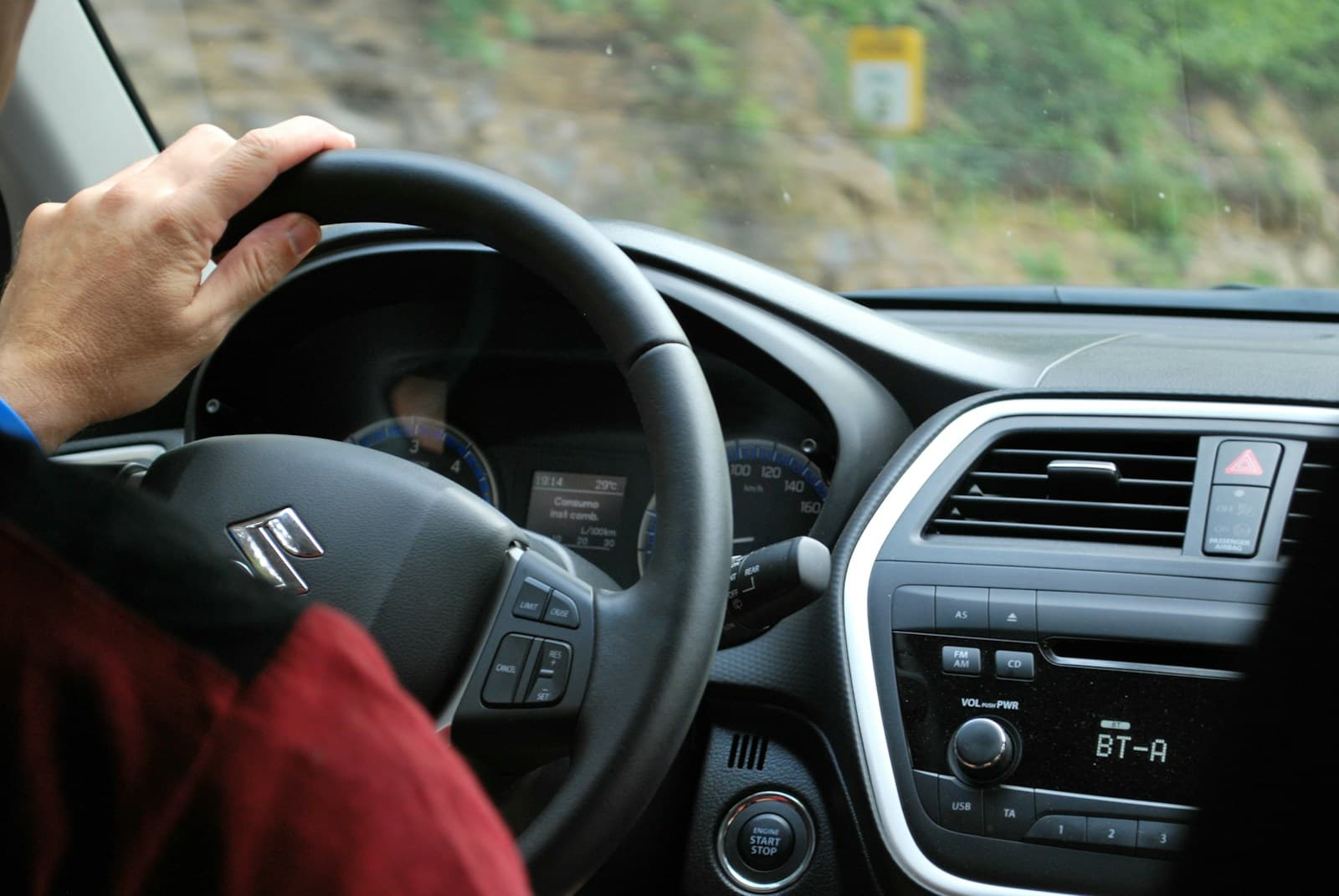
You've paid off your car, you're driving 6,000 miles a year instead of 15,000, and collision coverage is costing you $400–$700 annually on a vehicle worth $8,000. The math changes significantly after 65, but the decision isn't simply about vehicle value.
The Real Collision Math for Lincoln Drivers Over 65
The standard advice — drop collision when premiums exceed 10% of your vehicle's value — misses how Nebraska's fault system affects your actual financial risk. Nebraska is an at-fault state, meaning if another driver causes an accident, you file against their liability coverage. But if you're found at fault or the other driver is uninsured, collision coverage is the only thing protecting you from a total loss. For drivers over 65 in Lincoln, collision premiums typically range from $35 to $60 per month ($420–$720 annually) with a $500 or $1,000 deductible, depending on your vehicle and driving record.
The 10% rule works as a starting point: if your 2015 sedan is worth $9,000 and collision costs $600 annually, that's 6.7% — technically within the threshold. But that calculation ignores three realities specific to senior drivers. First, you're likely driving far fewer miles than during your working years, which reduces accident probability but doesn't proportionally reduce premiums. Second, if you have substantial retirement savings, you're effectively self-insuring anyway — a $9,000 loss, while unwelcome, may not justify paying $600 every year to protect against it. Third, collision doesn't cover medical expenses; that's where medical payments coverage or your Medicare supplement matters more.
Lincoln-specific factors complicate this further. Winter driving on icy roads increases single-vehicle accident risk — the kind collision covers even when no other driver is involved. If you're still driving regularly from November through February, that seasonal risk may justify keeping collision even on an older vehicle. But if you limit driving during severe weather or have alternative transportation, the risk profile shifts significantly.
When Dropping Collision Makes Financial Sense in Nebraska
Dropping collision coverage makes clear financial sense when three conditions align: your vehicle is worth less than $7,000, you have sufficient emergency savings to replace it without financial hardship, and you drive fewer than 7,500 miles annually. For most Lincoln drivers over 65, this threshold arrives between vehicle ages 8 and 12 years, depending on make and model. A 2013 Honda Accord might still be worth $8,500, while a 2013 Chevrolet Malibu has likely dropped below $6,000.
The savings are immediate and cumulative. If you're paying $480 annually for collision with a $500 deductible on a vehicle worth $6,500, you're paying 7.4% of the vehicle's value to protect the remaining $6,000 (after deductible). Over three years, you'll pay $1,440 in premiums — 22% of the vehicle's current value — while the car continues depreciating. That money could instead fund a vehicle replacement account or cover increased premiums elsewhere as you age.
Nebraska doesn't mandate collision coverage, even if you have a loan (though your lender will). Once your vehicle is paid off, the decision is entirely yours. Most Lincoln drivers over 65 own their vehicles outright — the median age of vehicles owned by this demographic is 11 years, well past the point where collision premiums represent good value. But don't drop collision and keep comprehensive; the risk calculus is different.
Compare rates from carriers that specialize in senior drivers
Mature driver discounts, low-mileage rates, and coverage reviews — see what you're actually eligible for.
Get Your Free Quote✓ Mature Driver Discounts✓ No Obligation✓ Licensed Carriers✓ All 50 States
Why Comprehensive Coverage Should Usually Stay, Even When Collision Goes
Comprehensive coverage — which protects against theft, hail, vandalism, and animal strikes — costs significantly less than collision and covers risks that don't depend on your driving behavior. In Lincoln, comprehensive typically runs $12–$22 per month ($144–$264 annually) with a $250 or $500 deductible, roughly 40–50% less than collision. More importantly, the risks comprehensive covers don't decrease with age or reduced mileage.
Lincoln's hail risk alone justifies keeping comprehensive for most drivers. Lancaster County experiences damaging hailstorms nearly every spring, with significant events in 2022 and 2023 causing widespread vehicle damage. A single severe hailstorm can total an otherwise functional vehicle, and comprehensive is the only coverage that protects you. Deer strikes are another factor — eastern Nebraska sees thousands of vehicle-deer collisions annually, with peak risk from October through December. Collision covers deer strikes in some policies, but comprehensive always does, regardless of fault.
The cost-benefit calculation is straightforward: if your vehicle is worth $6,000 and comprehensive costs $180 annually with a $500 deductible, you're paying 3% of the vehicle's value annually to protect against a $5,500 potential loss from events entirely outside your control. That remains reasonable value even on older vehicles. Most Lincoln drivers over 65 should drop collision before dropping comprehensive, not both simultaneously.
How Medicare Affects Your Post-Accident Medical Coverage Needs
Once you're on Medicare at 65, the interaction between your health coverage and auto insurance medical payments coverage changes significantly. Medicare Part B covers accident-related injuries regardless of whether a vehicle was involved, meaning medical payments coverage on your auto policy becomes partially redundant — but only partially. Nebraska allows medical payments coverage (often called MedPay) to act as primary coverage for accident-related expenses, paying before Medicare and without affecting your Medicare benefits.
This matters for two reasons. First, MedPay covers your deductibles and co-pays that Medicare doesn't, including ambulance services, which can cost $800–$1,200 in Lincoln. Second, if you have a Medicare Supplement (Medigap) plan that already covers those gaps, additional MedPay becomes genuinely redundant. Review your Medigap policy carefully — plans F and G cover most gaps that MedPay would address. If you're carrying $5,000 in MedPay at $8–$12 per month but have Medigap Plan G, you're paying for overlapping coverage.
However, MedPay covers passengers in your vehicle who may not be on Medicare — grandchildren, friends, or a spouse under 65. It also covers you as a pedestrian or cyclist struck by a vehicle. For Lincoln drivers over 65 who frequently transport grandchildren or don't have Medigap coverage, keeping $2,000–$5,000 in MedPay at $5–$10 monthly is worthwhile. But if you rarely have passengers and carry comprehensive Medigap, dropping MedPay when you drop collision can save an additional $60–$120 annually without increasing your real risk.
Nebraska's Fault Rules and What Happens When You Drop Collision
Nebraska's at-fault system means if another driver causes an accident, you file a claim against their liability insurance, not your own collision coverage. This works well when the at-fault driver has adequate coverage — but 13.5% of Nebraska drivers are uninsured, according to the Insurance Information Institute, slightly below the national average but still representing one in eight vehicles on the road. If an uninsured driver totals your car, collision coverage would pay your loss; without it, your only recourse is suing the at-fault driver, who likely has no assets worth pursuing.
This is where uninsured motorist property damage (UMPD) coverage becomes critical after dropping collision. Nebraska doesn't require UMPD, but it's inexpensive — typically $3–$6 monthly in Lincoln — and covers vehicle damage when an uninsured or underinsured driver is at fault. UMPD doesn't replace collision; it won't help if you slide off an icy road with no other vehicle involved. But it closes the largest gap collision coverage addresses: protecting you from financial loss caused by other drivers.
The strategic approach for Lincoln drivers over 65: drop collision once your vehicle value and financial reserves make self-insurance reasonable, but add or maintain UMPD to protect against uninsured motorists. This combination costs roughly $36–$72 annually versus $420–$720 for collision, while covering the most likely scenario where you'd actually file a claim — another driver's fault. If you're also keeping comprehensive for hail and deer, you've maintained protection against most significant risks at a fraction of full coverage cost.
The Right Time to Drop Collision: Three Decision Checkpoints
The decision to drop collision isn't one-time; it should be re-evaluated at three specific checkpoints. First, when your vehicle reaches 8–10 years old, calculate current value using Kelley Blue Book or NADA, not what you think it's worth. Compare that value to your annual collision premium plus deductible. If you'd pay $920 total ($420 premium + $500 deductible) to recover a $7,000 loss, you're protecting only $6,080 — and that gap narrows each year.
Second, when your annual mileage drops below 8,000 — typically at full retirement when you're no longer commuting. Lower mileage doesn't eliminate accident risk, but it reduces it proportionally. If you've cut your driving by 60% but your collision premium has only decreased 15% due to a low-mileage discount, the value proposition has deteriorated. At that checkpoint, confirm whether your savings and income can absorb a total vehicle loss without hardship. If yes, collision is probably no longer justified regardless of vehicle value.
Third, when you receive a renewal notice showing a rate increase. Nebraska insurers can raise rates based on age-related risk factors, not just claims. If your collision premium jumps from $42 to $54 monthly despite no claims or violations, that's the moment to recalculate. Call your insurer and request a quote with collision removed — you'll see the savings immediately. Many Lincoln drivers over 65 discover they can drop collision, add UMPD, increase their liability limits, and still pay less overall than they were paying for full coverage on a depreciating vehicle.