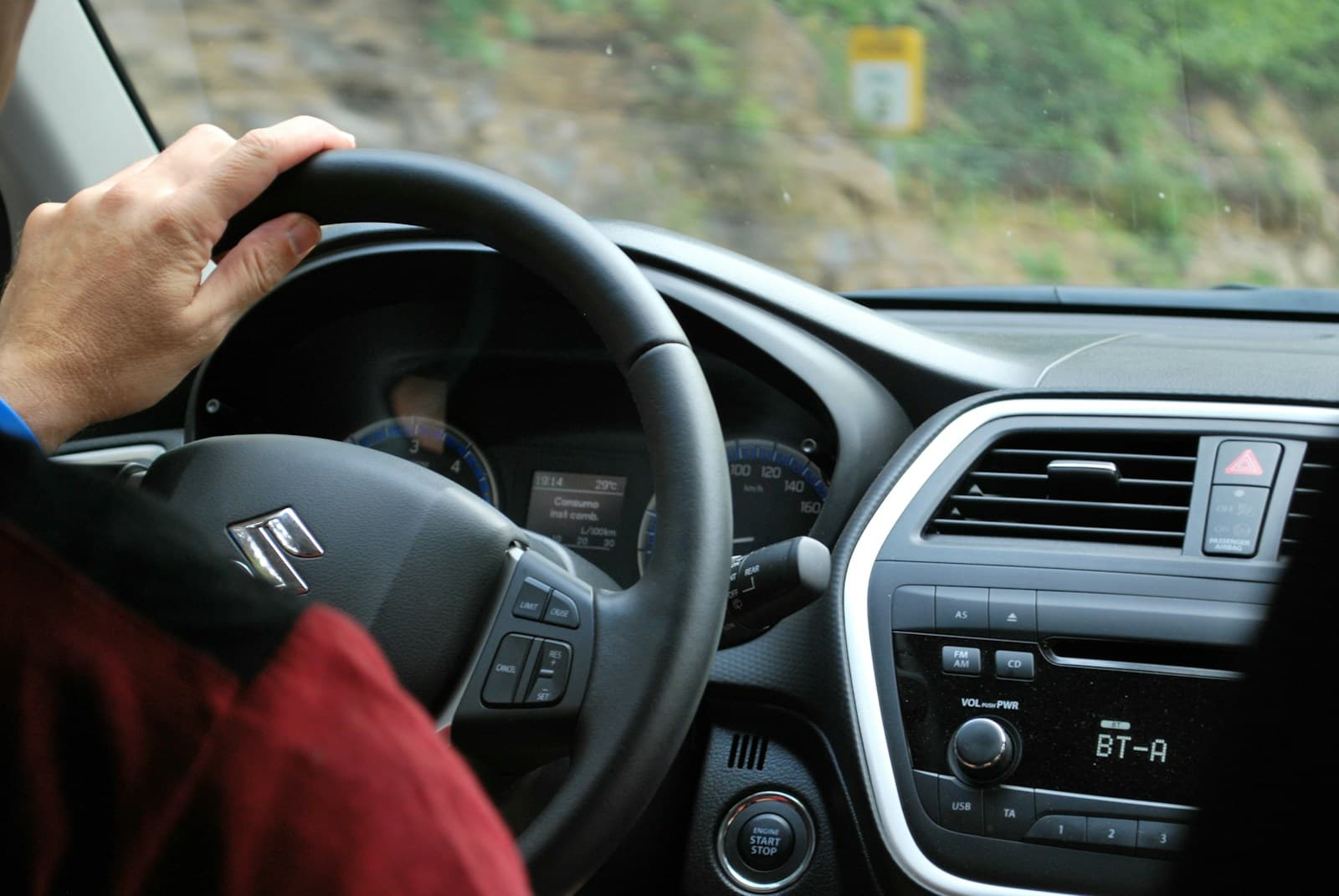
You've paid off your car, you're driving 6,000 miles a year instead of 15,000, and your insurer still wants $180/mo for full coverage. Here's how to decide what makes financial sense after 65 in Alaska's unique insurance market.
The Real Cost Difference Between Liability and Full Coverage After 65
Full coverage in Anchorage typically costs senior drivers $140–$220/mo, while liability-only policies run $45–$75/mo for drivers with clean records. That's a difference of $95–$145 monthly, or $1,140–$1,740 per year in premium savings if you drop comprehensive and collision coverage.
The gap matters more on a fixed income, but the decision isn't just about monthly cash flow. If your vehicle is worth $8,000 and you're paying $1,600 annually for full coverage, you'll recover the car's value in premium savings over five years even if you never file a claim. For a 12-year-old sedan worth $6,000, the break-even point drops to under four years.
Alaska's higher-than-average collision and comprehensive rates complicate this calculation. Anchorage sees elevated comprehensive claims from wildlife collisions, winter weather damage, and theft in certain neighborhoods. A moose strike that totals your paid-off Subaru isn't covered under liability-only — and comprehensive claims in Alaska run 15–20% higher than the national average due to wildlife and weather exposure.
Alaska's Minimum Liability Requirements and What They Actually Cover
Alaska requires 50/100/25 liability coverage: $50,000 per person for bodily injury, $100,000 per accident, and $25,000 for property damage. Those minimums are higher than most states, which means switching to liability-only in Anchorage still provides more protection than bare-minimum coverage in states like California or Arizona.
But $50,000 in bodily injury coverage can evaporate quickly if you cause a serious accident. Emergency room treatment, ambulance transport, and follow-up care for a single injured driver often exceeds $40,000 in Anchorage's medical market. If the other driver requires surgery or extended treatment, you're personally liable for costs above your policy limit.
Most financial advisors recommend 100/300/100 liability limits for senior drivers with assets to protect — retirement accounts, home equity, and savings are all vulnerable in a lawsuit. The cost difference between 50/100/25 and 100/300/100 is typically $15–$30/mo in Anchorage, far less than the $95–$145/mo you'd save by dropping collision and comprehensive. You can carry liability-only and still choose higher limits.
Compare rates from carriers that specialize in senior drivers
Mature driver discounts, low-mileage rates, and coverage reviews — see what you're actually eligible for.
Get Your Free Quote✓ Mature Driver Discounts✓ No Obligation✓ Licensed Carriers✓ All 50 States
When Full Coverage Still Makes Sense for Anchorage Seniors
If your vehicle is worth more than $10,000 and you don't have $10,000 in liquid savings to replace it after a total loss, full coverage remains the prudent choice. The same applies if your car is financed or leased — lenders require comprehensive and collision until the loan is satisfied.
Anchorage's wildlife and weather risks create a specific calculation other regions don't face. A moose collision on the Glenn Highway, black ice damage in a January parking lot incident, or theft from an Eagle River driveway are all comprehensive claims. If you park outside year-round and drive through wildlife corridors regularly, comprehensive coverage costs $400–$700/year but protects against $8,000–$15,000 replacement scenarios that happen with measurable frequency.
Collision coverage becomes harder to justify as vehicle age increases. If you're driving a 2015 sedan worth $7,000 and collision coverage costs $600 annually with a $1,000 deductible, you're paying for coverage that would net you $6,000 maximum after the deductible. After two years of premiums, you've spent $1,200 to protect a depreciating asset — and if you do file a claim, your rates will likely increase $200–$400/year for the next three to five years.
How Medicare Interacts With Medical Payments Coverage in Alaska
Alaska doesn't require personal injury protection (PIP), but most carriers offer medical payments coverage (MedPay) as an optional add-on. MedPay pays $1,000–$10,000 for medical expenses after an accident, regardless of fault, and covers you and your passengers.
If you're on Medicare, MedPay functions as a first-response layer before Medicare processes claims. Medicare doesn't cover ambulance rides or emergency care as quickly as MedPay — you'll receive direct payment from your auto insurer within days, while Medicare claims can take weeks. For senior drivers with supplemental Medicare plans (Medigap), MedPay fills gaps that supplements don't always cover immediately.
The cost is modest: $5,000 in MedPay coverage typically adds $8–$15/mo to your premium in Anchorage. If you're dropping collision and comprehensive to save $100/mo, adding $10/mo in MedPay preserves some accident protection without the cost of full coverage. It won't replace your car, but it will cover your medical bills and those of any passengers.
Alaska's Mature Driver Course Discount and How It Affects Both Coverage Types
Alaska doesn't mandate that insurers offer mature driver course discounts, but most major carriers provide them voluntarily. AARP's Smart Driver course and AAA's Driver Improvement Program both qualify, and completing either typically reduces premiums by 5–10% for drivers 55 and older.
That discount applies to your total premium, whether you carry liability-only or full coverage. On a $180/mo full coverage policy, a 10% mature driver discount saves $18/mo or $216 annually. On a $60/mo liability-only policy, the same percentage saves $6/mo or $72/year. The discount lasts three years in most cases, after which you'll need to retake the course to renew it.
The course costs $20–$30 for AARP members (membership is $16/year) and can be completed online in four to six hours. If you're comparing liability-only versus full coverage, factor the post-discount premium into your calculation — a $160/mo full coverage policy after discount versus $54/mo liability-only changes the annual savings from $1,740 to $1,272, which affects your break-even timeline.
Low-Mileage Programs and Usage-Based Discounts for Retired Anchorage Drivers
If you're driving under 7,500 miles annually — common for seniors who no longer commute — low-mileage discounts can reduce premiums by 10–25% regardless of coverage type. Alaska's major insurers offer mileage-based programs, though availability varies by carrier.
Progressive's Snapshot, State Farm's Drive Safe & Save, and Allstate's Drivewise all use telematics to verify mileage and safe driving behaviors. You install a device or smartphone app, and your insurer tracks miles driven, hard braking, and time of day. For senior drivers with clean habits who drive infrequently, these programs typically yield 15–30% discounts after the initial monitoring period.
The combination of low-mileage and mature driver discounts can make full coverage affordable again. A baseline $180/mo full coverage policy drops to $162/mo with a 10% mature driver discount, then to $113–$130/mo with a 20–30% low-mileage discount. At $120/mo, the annual cost is $1,440 — still higher than liability-only, but within range if your vehicle value and replacement capacity justify the coverage.
Making the Switch: What to Know Before Dropping Coverage
Once you drop comprehensive and collision, you can't retroactively reinstate them after an accident. If you remove full coverage in March and total your car in June, you'll receive no payout for your vehicle's value — only liability protection for damage you cause to others.
Before making the change, verify that your lienholder (if any) has released the vehicle and no longer requires full coverage. Check your vehicle's actual cash value using Kelley Blue Book or NADA Guides — dealership trade-in value is the relevant number, not private party sale price. If your car is worth $4,500 and you're paying $1,500/year for full coverage with a $1,000 deductible, you're insuring a $3,500 net payout at a cost that approaches the benefit.
Consider a middle path: drop collision but keep comprehensive. In Anchorage, comprehensive-only coverage (with liability) costs roughly 60–70% less than full coverage. You're protected against theft, wildlife, weather, and vandalism but not at-fault collisions. For senior drivers with clean records who rarely drive in heavy traffic or adverse conditions, this option preserves wildlife and weather protection while eliminating the highest-cost component.