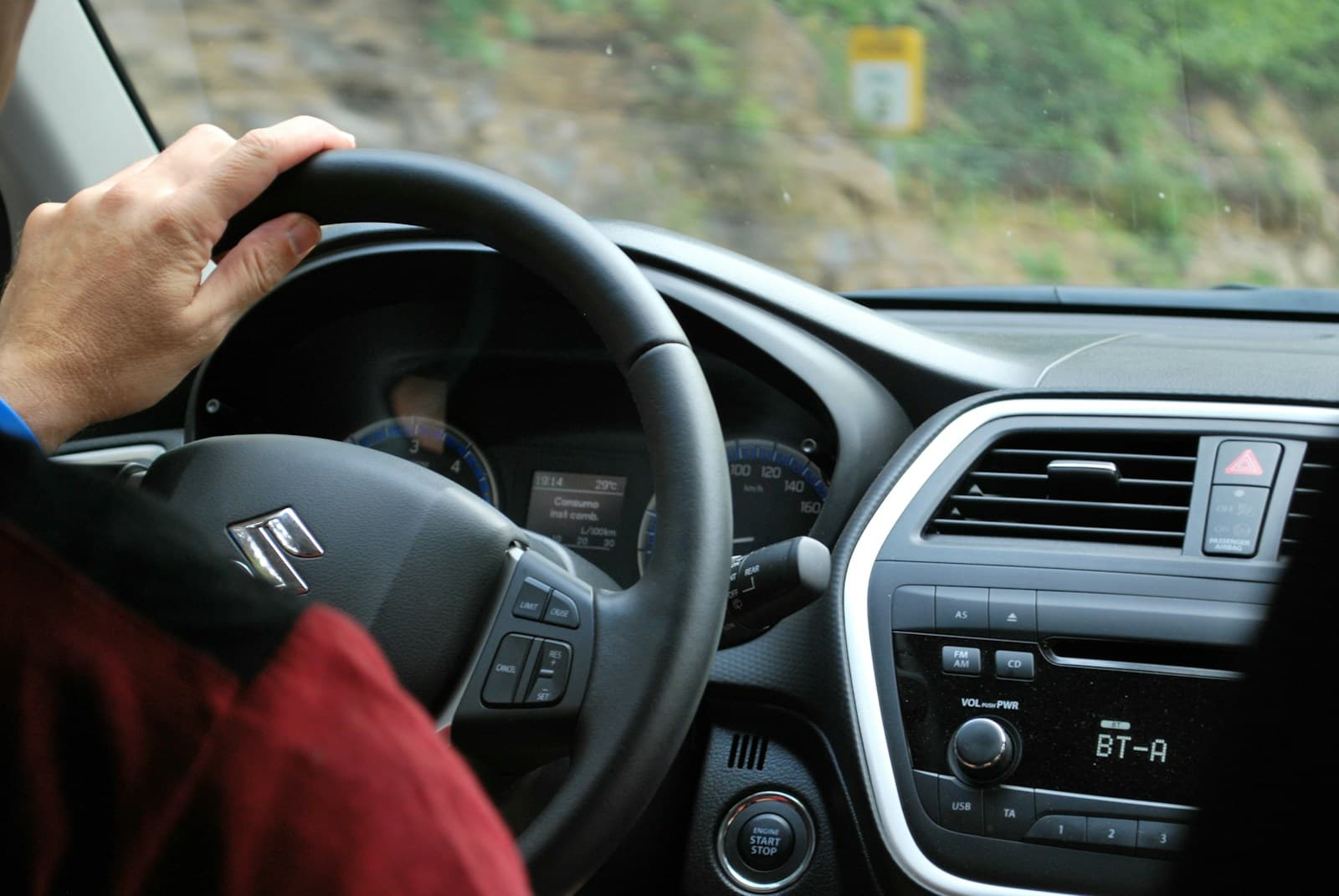
You've paid off your car, you're driving 40% fewer miles than you did before retirement, and you're wondering whether you're still paying for collision and comprehensive coverage you may no longer need. Here's how to make that decision in Arlington with actual numbers.
The Real Cost Difference in Arlington for Senior Drivers
Full coverage for a 70-year-old Arlington driver with a clean record typically costs $145–$185/mo, while liability-only coverage for the same driver runs $55–$75/mo. That's a difference of $90–$110 per month, or roughly $1,080–$1,320 annually — money that comes directly out of fixed retirement income.
The question isn't whether full coverage offers more protection — it does. The question is whether that additional protection is worth more than what you're paying for it. If your 2015 sedan has a current market value of $6,500 and you're paying $1,200/year for collision and comprehensive coverage with a $500 deductible, you'll recover at most $6,000 in a total loss. After two years of premiums, you've paid $2,400 for coverage on an asset that's likely worth $5,500 or less by then.
This calculation changes dramatically based on your vehicle's age and value, your savings cushion, and whether you could replace the car out-of-pocket if needed. Many Arlington seniors who retired in the past five years are still carrying the same coverage they had when commuting to D.C. or Pentagon City, despite now driving 5,000 miles per year instead of 15,000.
When Full Coverage Still Makes Sense After 65
Keep full coverage if your vehicle is worth more than $10,000 and you don't have $10,000–$15,000 in accessible savings to replace it after a total loss. The purpose of collision and comprehensive coverage is to transfer financial risk you can't comfortably absorb yourself — if losing the car would create genuine hardship, the premium is justified regardless of the mathematical break-even point.
Full coverage also makes sense if you're still making payments on the vehicle, since your lender requires it, or if you lease. Some Arlington seniors who downsized from a larger home now drive newer vehicles purchased with proceeds from the sale — a 2022 model worth $28,000 justifies comprehensive and collision coverage even at higher senior rates.
Consider keeping comprehensive coverage even if you drop collision. Comprehensive covers theft, vandalism, weather damage, and animal strikes — risks that exist regardless of how carefully you drive. In Arlington, comprehensive-only coverage typically adds just $25–$40/mo to a liability policy, and it protects against the kinds of random losses that have nothing to do with your driving ability. A deer strike on Route 50 or hail damage from a summer storm can total an older vehicle, and comprehensive coverage with a $1,000 deductible often costs less than $400 annually.
Compare rates from carriers that specialize in senior drivers
Mature driver discounts, low-mileage rates, and coverage reviews — see what you're actually eligible for.
Get Your Free Quote✓ Mature Driver Discounts✓ No Obligation✓ Licensed Carriers✓ All 50 States
Virginia's Minimum Liability Requirements and What They Mean for You
Virginia requires minimum liability coverage of 25/50/20: $25,000 per person for bodily injury, $50,000 per accident, and $20,000 for property damage. These are the legal minimums, but they're inadequate for most senior drivers, particularly those with retirement assets that could be targeted in a lawsuit after an at-fault accident.
If you cause an accident in Arlington that seriously injures another driver, medical bills alone can exceed $25,000 within days — emergency transport, surgery, and initial hospitalization frequently run $40,000–$80,000. The difference between your $25,000 policy limit and the actual damages becomes your personal liability, and Virginia allows injured parties to pursue your savings, home equity, and other assets to cover the gap.
Most insurance professionals recommend 100/300/100 coverage for senior drivers with assets to protect: $100,000 per person, $300,000 per accident, $100,000 property damage. The cost difference between minimum liability and 100/300/100 in Arlington is typically $15–$30/mo — a small price for protection that scales with your actual financial exposure. If you own your home in Arlington, where median home values exceed $650,000, you're carrying significant assets that minimum liability coverage leaves exposed.
Medical Payments Coverage and Medicare: The Gap Virginia Seniors Face
Medical payments coverage (MedPay) pays your medical bills after an accident regardless of fault, and it works differently than Medicare in ways that matter for Arlington seniors. Medicare covers accident-related injuries, but it may seek reimbursement from your auto insurance if the accident was someone else's fault — a process called subrogation that can delay your access to settlement funds.
MedPay coverage of $5,000–$10,000 costs roughly $8–$15/mo in Arlington and pays immediately after an accident without the coordination-of-benefits delays that occur when Medicare is primary. If you're injured in an accident, MedPay covers your Medicare deductibles, copays, and any services Medicare doesn't fully cover during the initial treatment period. For a senior on a fixed income, a $5,000 MedPay policy can prevent the need to tap savings for out-of-pocket medical costs while insurance companies and Medicare sort out primary responsibility.
This coverage becomes particularly valuable if you're in an accident caused by an uninsured driver or in a situation where fault is disputed. MedPay pays your bills while liability is being determined, whereas waiting for the other driver's insurance to accept fault — a process that can take weeks or months — leaves you covering costs in the interim.
The Mature Driver Course Discount Arlington Seniors Miss
Virginia law requires insurers to offer a discount to drivers who complete an approved mature driver improvement course, but it doesn't mandate the discount amount — Arlington seniors report discounts ranging from 5% to 15% depending on the carrier. For a driver paying $1,800/year for liability-only coverage, a 10% discount saves $180 annually, and the course typically costs $25–$35 through AARP or AAA.
The discount applies for three years in Virginia, meaning a single eight-hour course (available online or in-person) can save $540 over that period. Most carriers don't automatically apply this discount — you must complete the course, submit the certificate, and specifically request the reduction. Arlington drivers who completed the course through AARP's online program report completing it in 6–8 hours over several sessions, with the certificate available immediately upon finishing.
Combine this with low-mileage discounts if you're driving under 7,500 miles per year. Many Arlington seniors who previously commuted to Washington now drive primarily for errands, medical appointments, and social activities — if your annual mileage has dropped by half since retirement, ask your insurer about usage-based or low-mileage programs. State Farm's Steer Clear and Progressive's Snapshot programs have both shown willingness to reduce premiums for senior drivers with verifiable low mileage, though the discount structures vary significantly.
Making the Switch: What Changes When You Drop Full Coverage
Switching from full coverage to liability-only mid-policy is allowed, and your insurer must refund the prorated premium for collision and comprehensive coverage you've already paid. If you're four months into a six-month policy and you drop full coverage, you'll receive a refund for roughly two months of the collision/comprehensive portion — typically $180–$220 for an Arlington senior driver.
Your liability limits, medical payments coverage, and uninsured motorist coverage remain unchanged when you drop collision and comprehensive. You're simply removing the coverage that pays for damage to your own vehicle in an at-fault accident or covered loss — everything else about your policy stays the same, including your declaration page showing proof of insurance for Virginia DMV purposes.
Before you make the switch, verify that you have adequate emergency savings to replace your vehicle if needed. A practical threshold: if your car is worth $6,000 and you have at least $8,000–$10,000 in accessible savings that isn't earmarked for other purposes, dropping full coverage is financially defensible. If losing the vehicle would force you to finance a replacement or go without transportation, the peace of mind from collision coverage may justify the premium even when the pure math suggests otherwise.
Uninsured Motorist Coverage: The One Thing Not to Drop
Roughly 12% of Virginia drivers are uninsured, and uninsured/underinsured motorist coverage protects you when an at-fault driver can't pay for the damage they cause. This coverage is optional in Virginia, but dropping it to save $10–$15/mo is one of the riskiest cuts a senior driver can make, particularly if you're also dropping collision coverage.
If an uninsured driver totals your paid-off vehicle and you've dropped both collision and uninsured motorist property damage coverage, you have no way to recover the loss — the at-fault driver has no insurance to claim against, and you've removed the coverage that would have stepped in to pay your loss. For Arlington seniors, uninsured motorist bodily injury coverage is even more critical: it pays your medical bills and lost income when you're injured by a driver with no insurance or insufficient liability limits.
Virginia allows you to match your uninsured motorist limits to your liability limits, and this symmetry makes sense — if you've decided you need $100,000 in liability coverage to protect your assets, you also need $100,000 in uninsured motorist coverage to protect yourself when someone without adequate coverage injures you. The cost for 100/300 uninsured motorist coverage in Arlington typically runs $20–$35/mo, and it's one of the highest-value components of any senior driver's policy.