If you've been diagnosed with Parkinson's disease, your carrier may ask health questions at renewal or when you file a claim — but disclosure rules, underwriting practices, and your actual obligation to report vary widely by state and insurer.
When Auto Insurers Can Ask About Parkinson's Disease
Auto insurance underwriting in most states focuses on your driving record, claims history, and credit-based insurance score — not your medical history. Unlike life or disability insurance, car insurance carriers in the majority of states cannot ask about health conditions when you renew an existing policy or purchase a new one, unless you're applying after a lapse in coverage or switching from a high-risk pool. However, six states — Florida, Michigan, Hawaii, Montana, New Jersey, and California under certain circumstances — permit limited health-related questions during underwriting, particularly for older drivers or those with recent at-fault accidents.
If you've held continuous coverage and are renewing with your current carrier, you typically face no health questionnaire. The exception: if your state requires periodic license renewal with medical certification after age 70 or 75, and that certification flags a condition requiring restricted licensing, your insurer may receive notification through state DMV data-sharing agreements. In practice, this affects fewer than 8% of senior drivers nationally, according to Insurance Information Institute data, but the percentage climbs in states with mandatory older-driver testing.
The more common trigger occurs when you switch carriers. New applications — even if you're moving from one standard carrier to another — often include a question like "Have you been diagnosed with any condition that affects your ability to operate a vehicle?" or "Has a physician advised you to stop driving?" These are distinct questions. A Parkinson's diagnosis alone does not mean you've been advised to stop driving, and answering the first question accurately requires understanding what your state defines as a reportable condition. liability coverage limits
What You're Legally Required to Disclose
No state requires you to proactively notify your auto insurer of a Parkinson's diagnosis if the condition is well-managed and your physician has not restricted your driving privileges. Your legal obligation centers on two scenarios: when a direct question appears on an application or renewal form, and when your driving privileges have been formally restricted by your state's Department of Motor Vehicles or a medical review board.
If your neurologist has reported your condition to the DMV — which is mandatory in California, Delaware, Nevada, New Jersey, Oregon, and Pennsylvania under specific symptom thresholds — and the DMV has imposed license restrictions (daytime-only driving, restricted radius, no highway use), you must disclose those restrictions to your insurer even if the application doesn't explicitly ask. Failing to do so can void coverage if the insurer later discovers you were driving outside your legal restrictions at the time of an accident. This is not a theoretical risk: a 2019 study by the National Association of Insurance Commissioners found that roughly 12% of claim denials for drivers over 70 involved undisclosed license restrictions.
If no restrictions have been imposed and your application asks about medical conditions, the safest approach is to answer "no" to questions about physician-advised cessation of driving (if that's accurate) and consult an independent agent before answering broader health questions. Many experienced agents recommend obtaining a letter from your neurologist stating that your condition is controlled and does not impair your driving ability — this can preempt underwriting concerns and, in some cases, prevent a surcharge.
How Carriers Use Health Information When They Receive It
When a carrier does learn of a Parkinson's diagnosis — either through disclosure on an application or a claim investigation — underwriting responses vary significantly. Progressive, State Farm, and USAA generally do not apply health-based surcharges for Parkinson's if your driving record is clean and no license restrictions exist. Geico and Allstate, in contrast, use tiered risk models in states where health-based underwriting is permitted, which can result in a 15–25% rate increase even without an accident history, according to rate filings reviewed in Florida and New Jersey between 2021 and 2023.
The larger risk is non-renewal. If your insurer learns of your diagnosis and your state permits health-based underwriting, they may choose not to renew your policy at the end of the term. This is legal in most states as long as the insurer provides 30–60 days' notice (timelines vary by state). Non-renewal does not mean you're uninsurable, but it typically forces you into a higher-cost market: either a standard carrier willing to insure higher-risk drivers at elevated premiums, or in rare cases, your state's assigned risk pool.
One underreported option: some carriers offer "medical waiver" endorsements for drivers with disclosed conditions. If your neurologist certifies that your symptoms are controlled and you complete a defensive driving or mature driver course, carriers like The Hartford and AAA in some states will waive surcharges or avoid non-renewal. These endorsements are not widely advertised and usually require your agent to request them on your behalf. Eligibility and cost vary, but the typical range is $8–$15 per month added to your premium — substantially less than the 15–40% surcharge applied without the waiver. whether your state mandates certain discounts
State-Specific Reporting Rules and How They Affect Coverage
Six states impose mandatory physician reporting of certain medical conditions to the DMV, and Parkinson's is included when symptoms meet defined thresholds (typically loss of motor control, freezing episodes, or cognitive impairment). In California, physicians must report any diagnosed condition that, in their judgment, impairs safe driving. The DMV then initiates a medical review, which may result in no action, a requirement for a driving test, or license restrictions. If restrictions are imposed, your insurer will eventually learn of them — California DMVs share this data with insurers through the state's Driver Record Request system.
In states without mandatory reporting — the majority — your neurologist is not required to notify anyone unless you pose an immediate danger. However, some neurologists will advise patients to "self-report" to the DMV as a protective measure, particularly if you've experienced any on-road incidents. Self-reporting does not automatically result in restrictions, but it does create a record. If you later apply for new insurance, that record may surface during underwriting.
Pennsylvania, Oregon, and New Jersey allow conditional reporting, where physicians report only if specific symptoms are present and the patient continues driving against medical advice. In these states, a well-managed Parkinson's diagnosis with no restrictions typically generates no DMV record and no insurer notification. If you live in one of these states and your condition is stable, switching carriers may carry less risk than in California or Delaware, where any DMV review creates a permanent record accessible to insurers.
What Happens If You're in an Accident
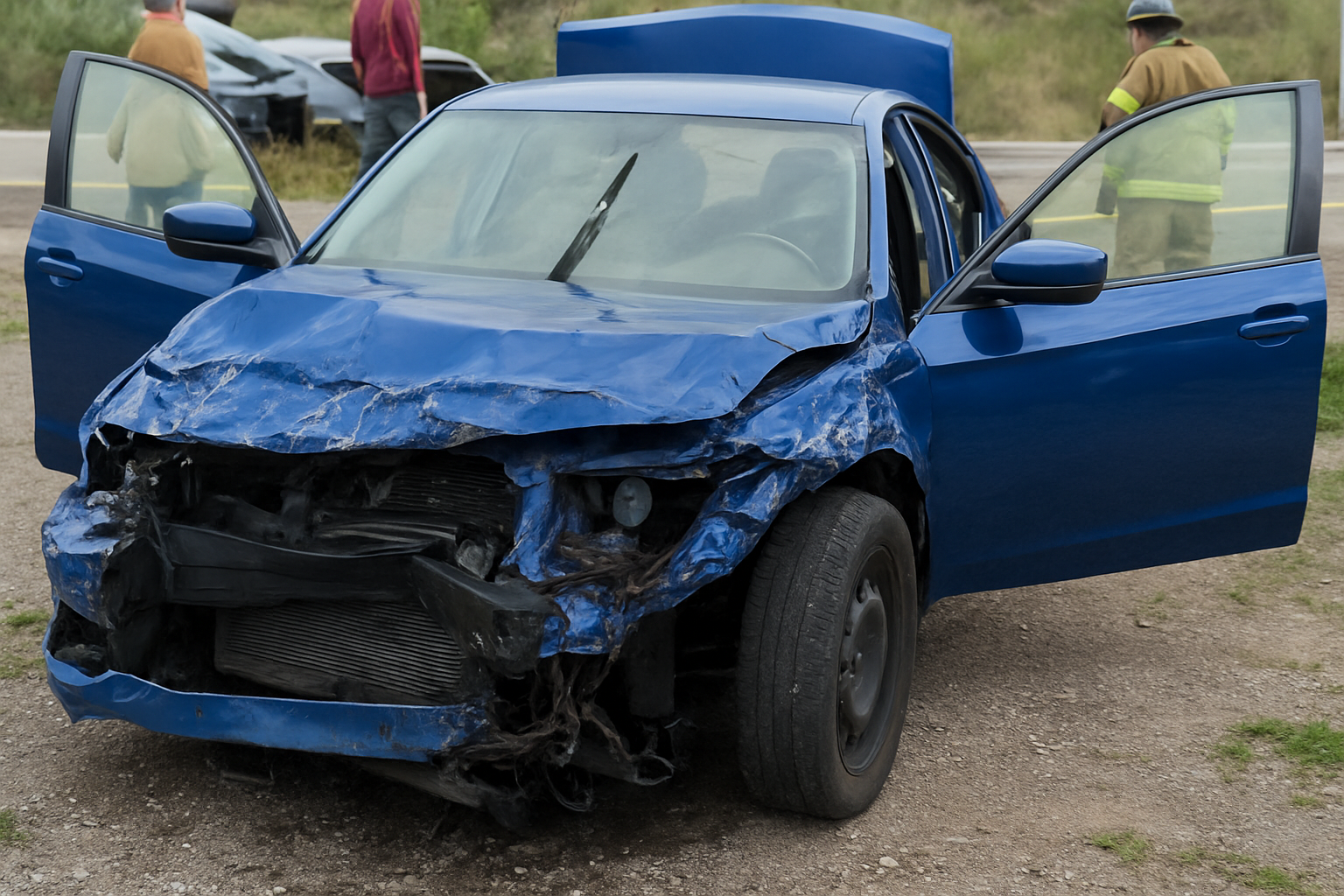
If you're involved in an accident — at-fault or not — and the investigating officer or claims adjuster has reason to believe a medical condition contributed, your insurer will investigate. This can include requesting your medical records (which requires your signed authorization), interviewing witnesses, and reviewing any available dashcam or police reports. If your Parkinson's diagnosis appears in those records and you did not disclose it on your application when directly asked, the insurer may deny the claim and rescind your policy for material misrepresentation.
Material misrepresentation requires proof that you knowingly provided false information in response to a direct question and that the condition you concealed would have affected underwriting. If your application never asked about medical conditions, your insurer cannot rescind based on non-disclosure. If it did ask and you answered truthfully based on the question's wording — for example, "Has a physician advised you to stop driving?" and your physician has not — you're protected even if the insurer later learns of your diagnosis.
The more common outcome after an accident is a non-renewal notice at the end of your policy term, even if the claim is paid. Carriers view any accident involving a senior driver with a disclosed or discovered neurological condition as elevated future risk, regardless of fault determination. If you're non-renewed after a claim, expect to pay 20–50% more with your next carrier, and be prepared for more detailed health questions on the application. Working with an independent agent who represents multiple carriers increases your odds of finding coverage at a manageable rate.
Strategies to Maintain Coverage and Manage Costs
If you have a Parkinson's diagnosis and have not been restricted from driving, the most effective strategy is to maintain continuous coverage with your current insurer and avoid switching unless rates become prohibitive. Renewals with an existing carrier almost never trigger health questions, and as long as your driving record remains clean, age-related rate increases are typically the only cost pressure you'll face — usually 8–12% between ages 65 and 75, with steeper increases after 75 in most states.
If you must switch carriers or are facing non-renewal, obtain documentation from your neurologist before shopping. A letter on official letterhead stating that your condition is stable, you're compliant with treatment, and no driving restrictions are warranted can be submitted with your application and may prevent automatic declination or high-risk classification. Some carriers, particularly those specializing in mature driver markets, will accept this documentation in lieu of a surcharge.
Consider reducing coverage costs in ways that don't compromise protection. If your vehicle is paid off and worth less than $5,000, dropping collision coverage can save $30–$60 per month without affecting your liability protection. Increasing your liability limits from state minimums to 100/300/100 — particularly important given that medical costs from accidents can quickly exceed basic coverage — typically adds only $12–$20 per month and protects your retirement assets in the event of a serious at-fault accident. Many senior drivers are underinsured on liability while overinsured on older vehicles.
Mature driver course discounts, available in 34 states either by mandate or carrier practice, typically reduce premiums by 5–10% and require no disclosure of medical conditions. AARP and AAA both offer online courses that take 4–6 hours to complete and cost $20–$25. The discount applies for three years in most states, generating $150–$400 in total savings for a typical senior driver paying $1,200–$1,500 annually. state-specific mature driver course requirements
When to Involve Family and When to Reconsider Driving
This is the question most articles avoid, but it's the one many readers are actually asking. If your neurologist has told you that your Parkinson's symptoms — tremor, rigidity, or bradykinesia — are not currently impairing your driving but will likely progress, you're facing a timeline decision, not an immediate one. The median time from diagnosis to meaningful motor impairment that affects driving varies widely, but studies suggest 7–12 years for patients diagnosed after age 65 with good medication response.
If you're noticing changes — difficulty with lane positioning, delayed reaction time, or family members expressing concern — a formal driving evaluation by an occupational therapist certified in driver rehabilitation can provide objective data. Medicare does not typically cover these assessments, and out-of-pocket cost ranges from $300 to $500, but the evaluation generates documentation that can guide both your decision-making and any future conversations with insurers or the DMV. Some evaluations result in recommendations for vehicle modifications (steering knob, pedal extensions) that can extend safe driving for years.
Involving adult children or family members in insurance and driving decisions is appropriate when you're ready for that conversation, but it should not be driven by insurer pressure or generic age-based assumptions. Many drivers with early-stage Parkinson's are safer behind the wheel than drivers half their age with distracted driving habits. The decision to reduce driving or stop altogether should be based on clinical evidence and your own honest self-assessment — not on insurance underwriting models that treat all neurological diagnoses identically.
